Parmigiano Butter Crackers

Parmigiano Butter Crackers

Parmigiano Butter Crackers

I’m not a cracker eater. I could go through a loaf of bread, but crackers usually leave me cold.

Not these.

Parmigiano Butter Crackers

Parmigiano Butter Crackers

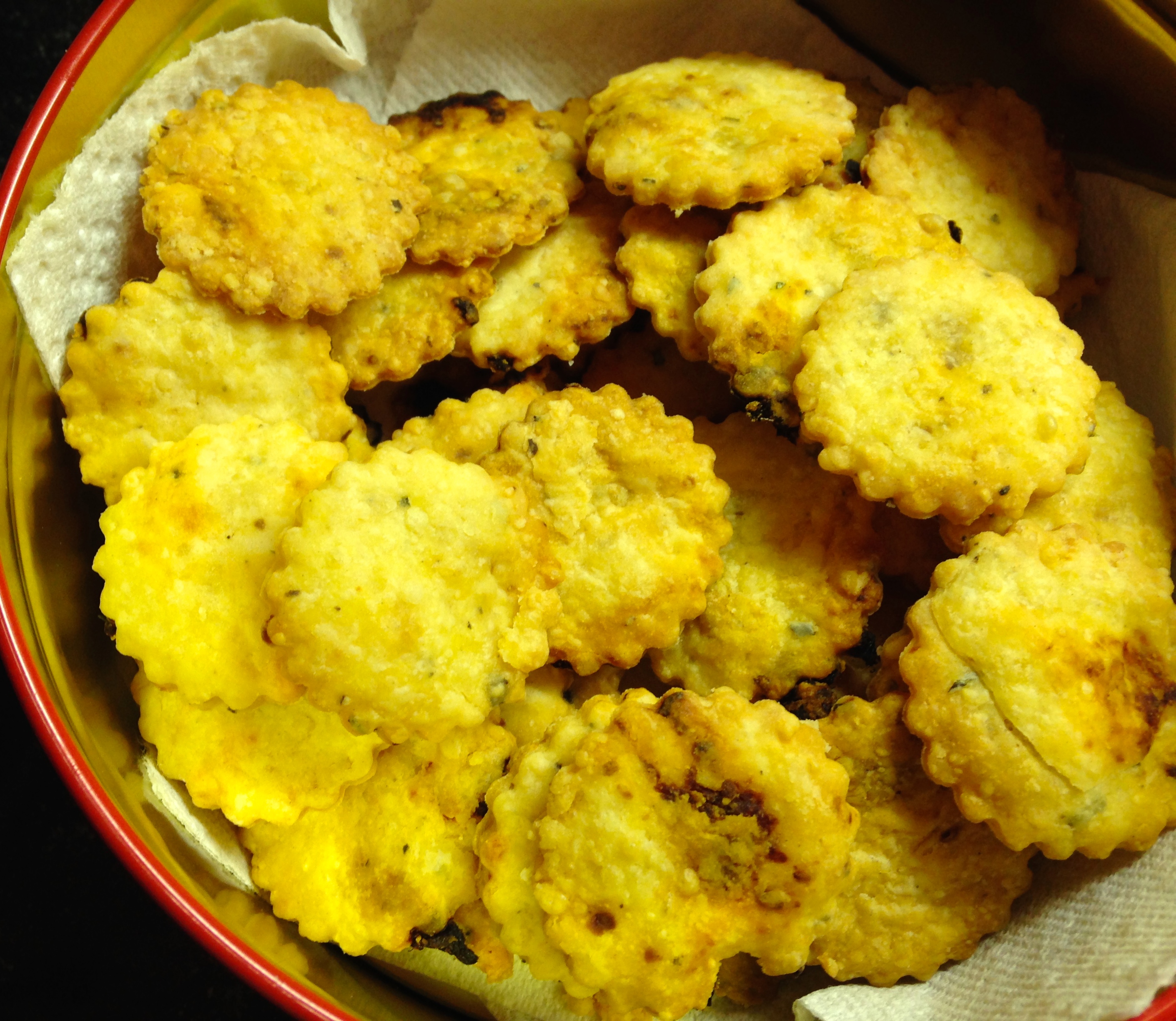
Parmigiano cheesy. Buttery. Dappled with sun-dried tomato and rosemary.

The flavor makes you pop them one after the other. I often wonder if they might like a friend…like a dip or a spread or a salsa. But why mess up a good thing? The cracker all by itself, needs nothing else. Maybe a glass of wine. Or a cup of tea. Or a lemonade. Yes. It goes in all those directions. (Brandy, anyone?)

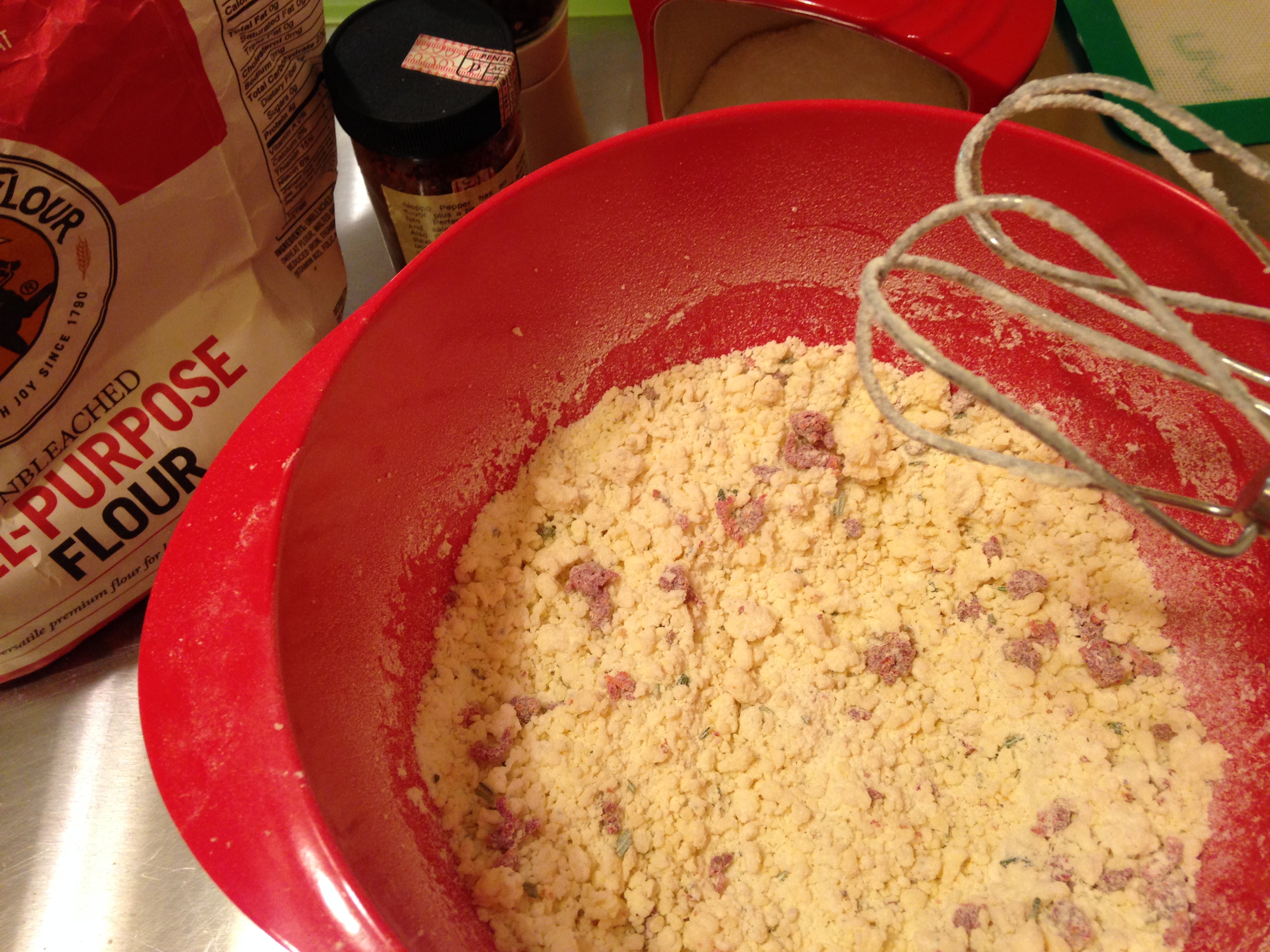
Softened butter, parmigiano, salt, pepper, aleppo with a hand mixer…

Butter, cheese, salt, pepper, aleppo

Butter, cheese, salt, pepper, aleppo

Add flour, sun-dried tomatoes, rosemary…

flour, sun-dried tomato, rosemary

flour, sun-dried tomato, rosemary

then 1 egg…

add egg

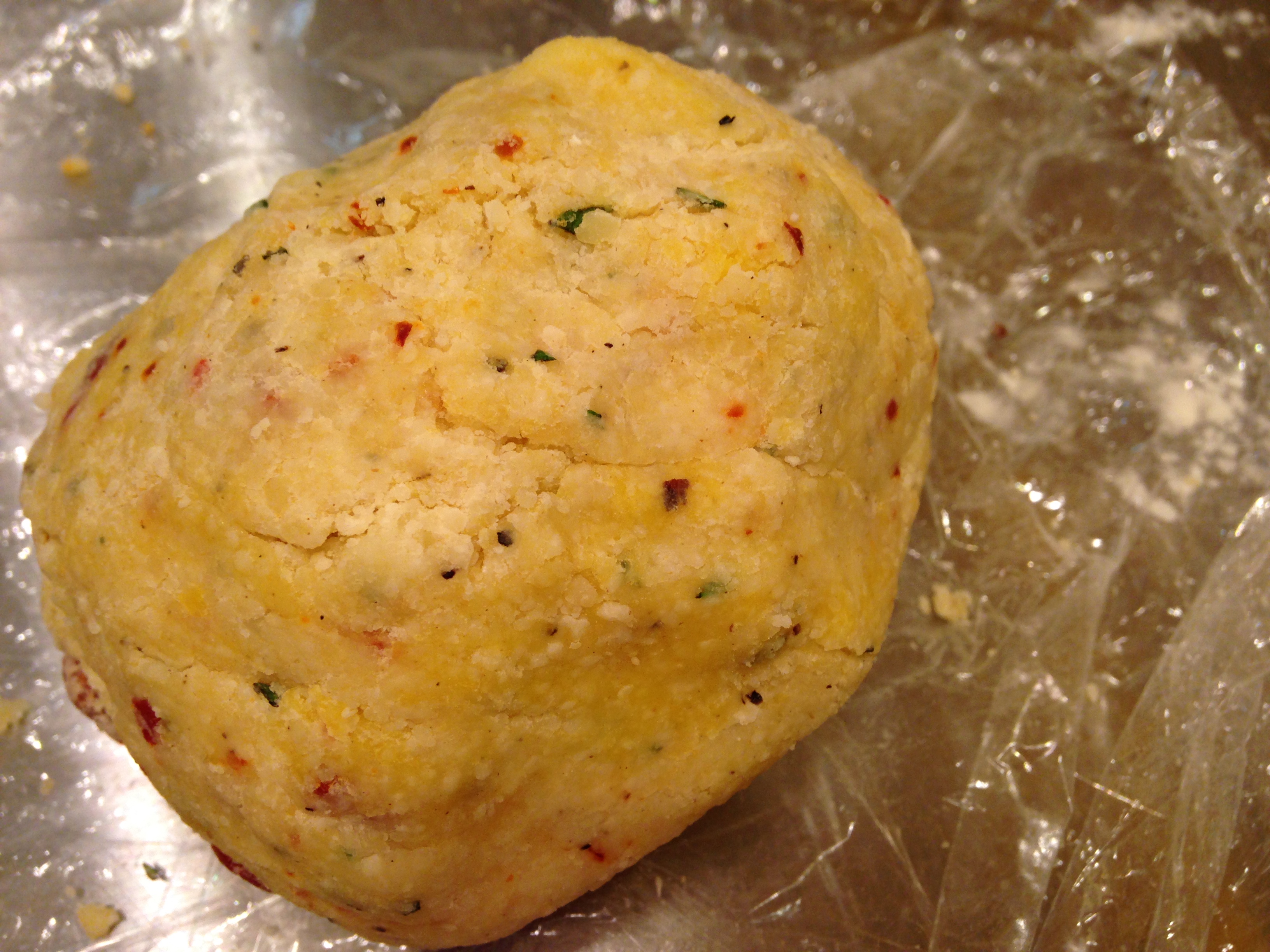
…mix, then knead into dough ball and refrigerate in plastic for an hour…

dough

roll out…

IMG_5006

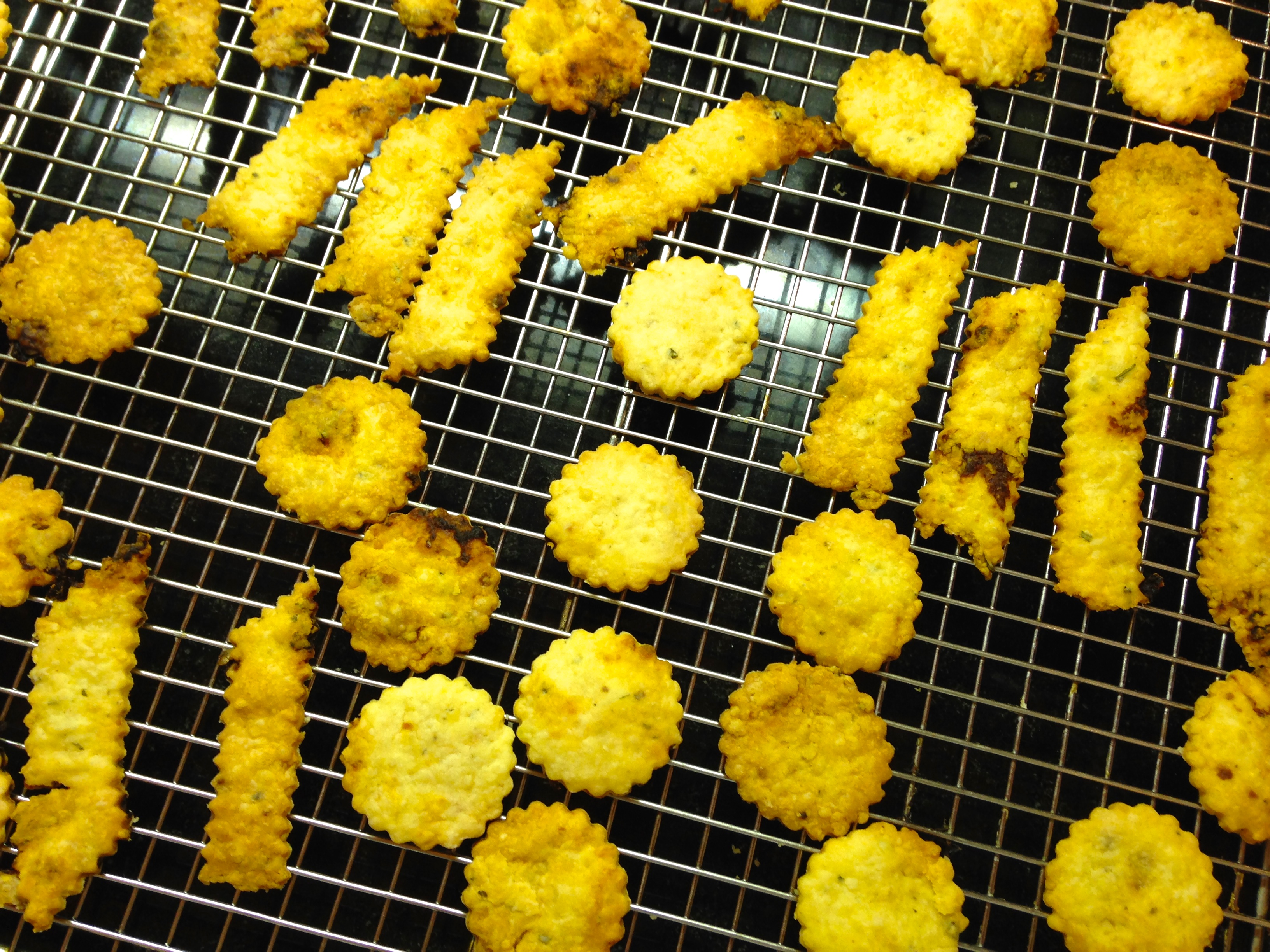
cut into strips…

IMG_5011

or circles…

IMG_5012

Bake for about 15 minutes at 350. Really. Try it. Let me know what you think!

IMG_5015

IMG_5009

Parmigiano Butter Crackers

1/4 cup butter (4 tablespoons), softened (room temperature)

1 1/4 cups grated parmigiano

healthy pinch of salt

pinch black pepper

pinch hot pepper

3/4 cup flour

1 tablespoon minced sun-dried tomato

1 tablespoon minced fresh rosemary

1 egg

Preheat oven to 350 degrees F.

Place the butter, parmigiano, salt, pepper and hot pepper in a large mixing bowl. Using a hand-held electric beater, mix together the ingredients until combined. Add the flour, sun-dried tomato and rosemary. Mix till combined. Add the egg, mix until a dough forms. Knead dough into a ball, cover with plastic wrap and refrigerate for about an hour.

Roll dough out on a lightly floured surface to about 1/8-inch thick. Using a fluted wheel cut strips of about 3-inches and/or using a small round cutter (about 1-inch-1 1/2-inch) cut out small circles. Place on a parchment-lined baking sheet and bake for about 15-20 minutes until golden. Let cool for about 1/2 hour before serving.


Twist Your Puff Pastry with Chocolate & Jam

sweet puff pastry twists

sweet puff pastry twists

And almonds.

I love playing with puff pastry dough. I’ve used store-bought (in the freezer section) often. Making your own puff pastry dough is a major project–one that I usually have no time to do. (But try it at least once…it’s fun and a great learning experience as to what goes into the stuff–think BUTTER!).

I’ve used Pepperidge Farm brand, Dufour, and Trader Joe (which they only sell during holiday season — why is that? I don’t know). And they all work beautifully.

Here is a twisted recipe. You can try this twist with a lot of fillings. I used to make twists like these using biscuit dough and filling it with butter, cinnamon and sugar. Then glazing the finished twists with vanilla icing. A kind of cinnamon bun in a twist.

But here’s how this recipe goes (we did it in class, too).

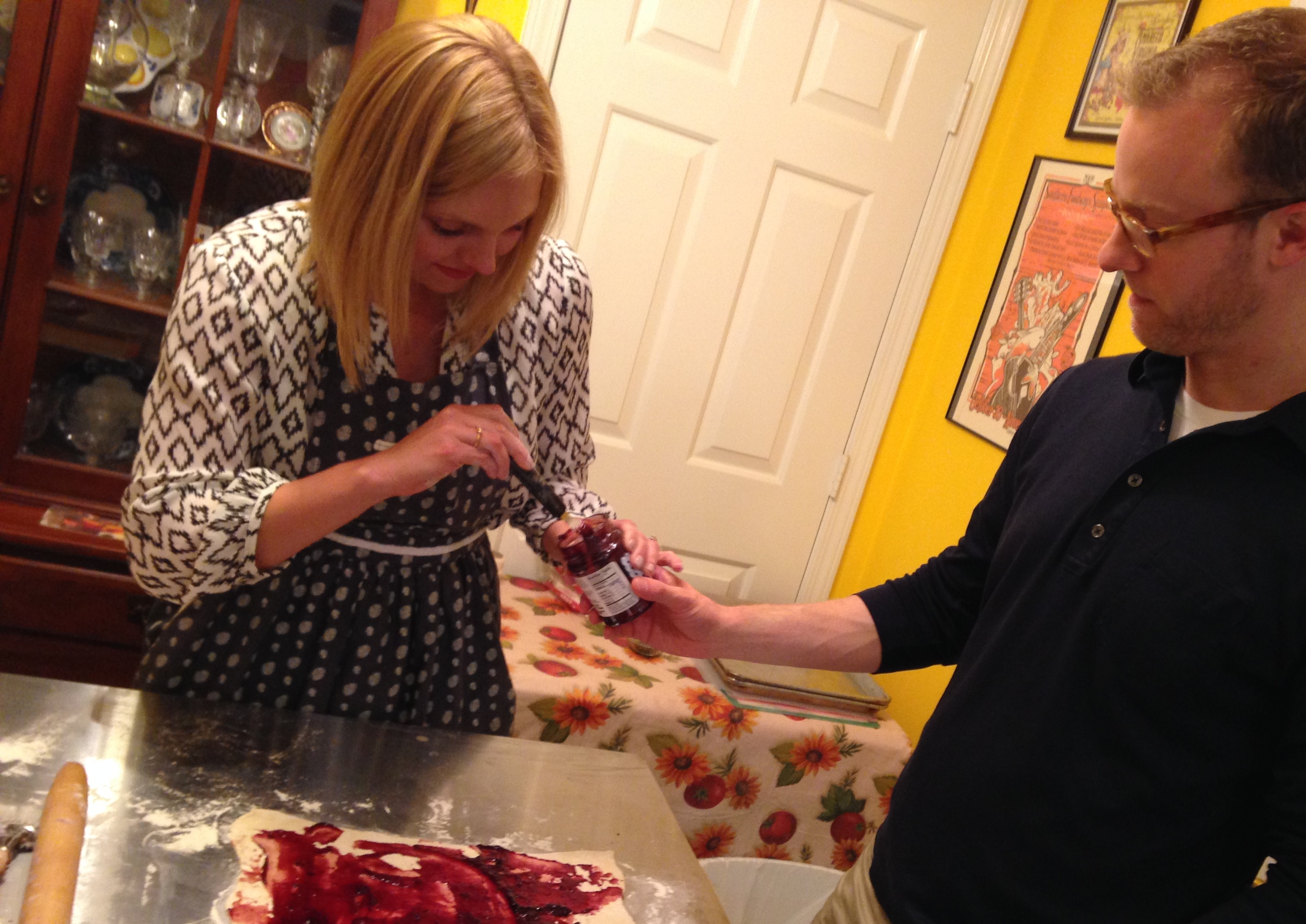
Roll out one puff pastry sheet of dough on a lightly floured work surface. Roll it till it’s about 30 percent bigger than it started out. Keep the rectangular shape. Spread your favorite jam in a thin layer on top.

Meg & Tim making pastry twists

Meg & Tim making pastry twists

Meg spreading the jam

Meg spreading the jam

Now cut the dough in half lengthwise (I use a fluted cutting wheel). Separate the pieces a bit. On one half sprinkle mini-chocolate chips. Just in a single layer and you don’t have to fill ever spot. Place about a 1/2 cup of sliced almonds in a plastic bag. Roll a rolling pin over them crushing them into small pieces. Sprinkle the small pieces of almond on top of the mini chocolate chips. Place the half with just the jam over the other half face down (so the 2 jams sides are touching) lined up evenly. Now cut across the shorter end into 3/4-inch strips (again, I use the fluted wheel).

Give each strip a double twist and place them on a parchment or silpat-lined baking sheet.

ready to bake

ready to bake

Continue with the rest of the dough. Egg wash the strips. Sprinkle sparkling sugar. Bake at 400 degrees for about 12 minutes until golden. Voila!

pastry twists in Kodachrome

pastry twists in Kodachrome

Next time I’ll show you my fav savory pastry twist…with olive paste, sun-dried tomatoes and sesame seeds. But first: dessert!


Good Old-Fashioned Lasagna

Good Old Fashioned Lasagna

Good Old Fashioned Lasagna

Sometimes I’m surprised that people need a recipe to make lasagna. Just shows how sheltered I am. How Italian food is part of my genes. How silly I can be.

Lasagna? You just make it! You need a recipe?

To be honest, I have made all kinds of lasagna from recipes. True Bolognese style. All white lasagna. Polenta lasagna. Spinach and vegetable lasagna. Butternut Squash lasagna. But in my cooking class the other day we made a good old-fashioned lasagna (with a few modern perks). It was so delicious! I wondered why did I ever stray from the classic?

Okay. What’s classic?

Classic is what I grew up with. A classic lasagna has: the pasta, ricotta, mozzarella, and tomato sauce. That’s the classic. But here’s my “modern” perks.

Turn the tomato sauce into a sausage sauce (like a meat sauce but use broken up sausage instead of ground beef. why not? it’s great). Let’s add some sliced hard-boiled egg to give it that Napolitana spin (or so my Sicilian-leaning background labels it). And instead of just plopping the ricotta as is, let’s add a little milk to it. Season it with salt and pepper. Make it smooth, looser, so it spreads more easily. The mozzarella? Not slices, not strips. Let’s grate it so it melts lightly and evenly. AND instead of buying lasagna pasta that you boil, use the no-boil which in the end tastes like fresh-made pasta (yes, it does!).

There. My classic lasagna. With some additions and tweaks. And it’s got the “oh man, this is REALLY GREAT” vibe.

Here are the details. Make it! Let me know how you like it. Grazie!

Lasagna w Sausage Sauce & Hard-Boiled Eggs

For the Sauce:

1 1/2 or 2 lbs. Italian sausage, meat removed from casings

2 tablespoons olive oil

1 medium onion, small dice

½ cup dry white wine

3- 28 oz canned crushed tomatoes

salt & pepper to taste

For Lasagna:

1 lb. no-boil Lasagna pasta

1 lb. mozzarella, grated on shredder side of a box grater

1 lb. ricotta., mixed with a ¼ cup of milk, seasoned with salt & pepper

6 hard-boiled large eggs, cut into thin slices

½ lb grated cheese, parmigiano, pecorino or mixture

Preheat oven to 375 degrees F.

Make the Sauce: Heat a couple of tablespoons of oil in a large sauce pan. Break up the sausage meat into small pieces. Cook until browned. You may have to do it in batches. Add the onion and cook until it softens. Add the wine and let evaporate. Add the tomatoes and season with salt & pepper. Let simmer for 20-30 minutes.

Make the Lasagna: Spoon a thin layer of sauce at the bottom of a pan that’s about 9″ X 13” and at least 3-inches deep. Place 3-4 pasta strips  in one layer on top of sauce. Coat each pasta strip well with a layer of sauce. Sprinkle some mozzarella. Spoon dollops of ricotta. Place a few rings of egg. Sprinkle some grated cheese and some black pepper. And a light drizzle of sauce. Repeat 3-4 more times until all the pasta sheets and ingredients have been used. Sprinkle some mozzarella and grated cheese on top. Drizzle some sauce.

Bake for about 45 minutes until the top is golden and the lasagna is bubbling. Let stand at room temperature for at least 15 minutes before cutting into squares and serving. It’s even better the next day.

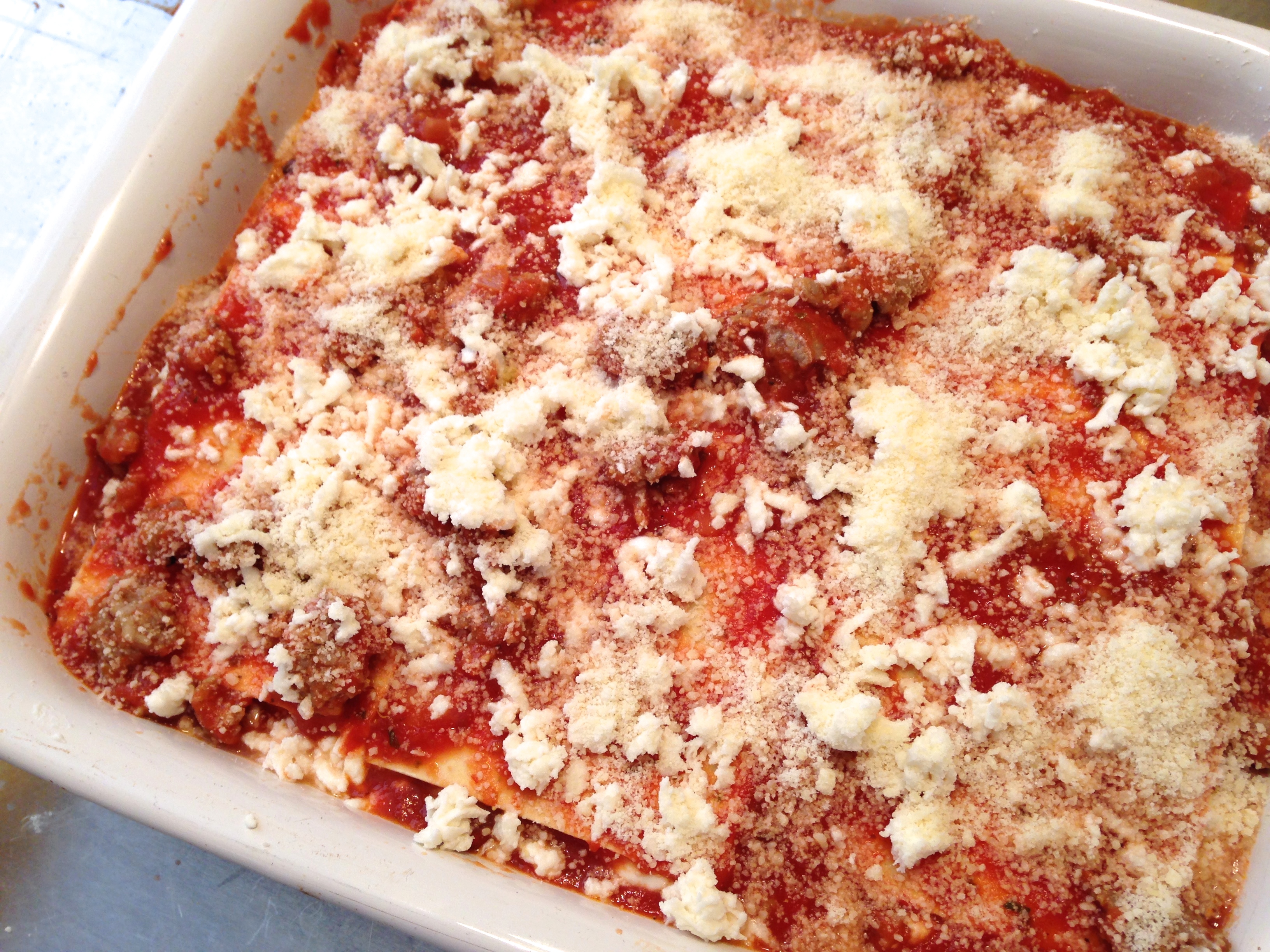
Lasagna all prepared and ready to bake

Lasagna all prepared and ready to bake


The Art (& Heart) of Artichokes

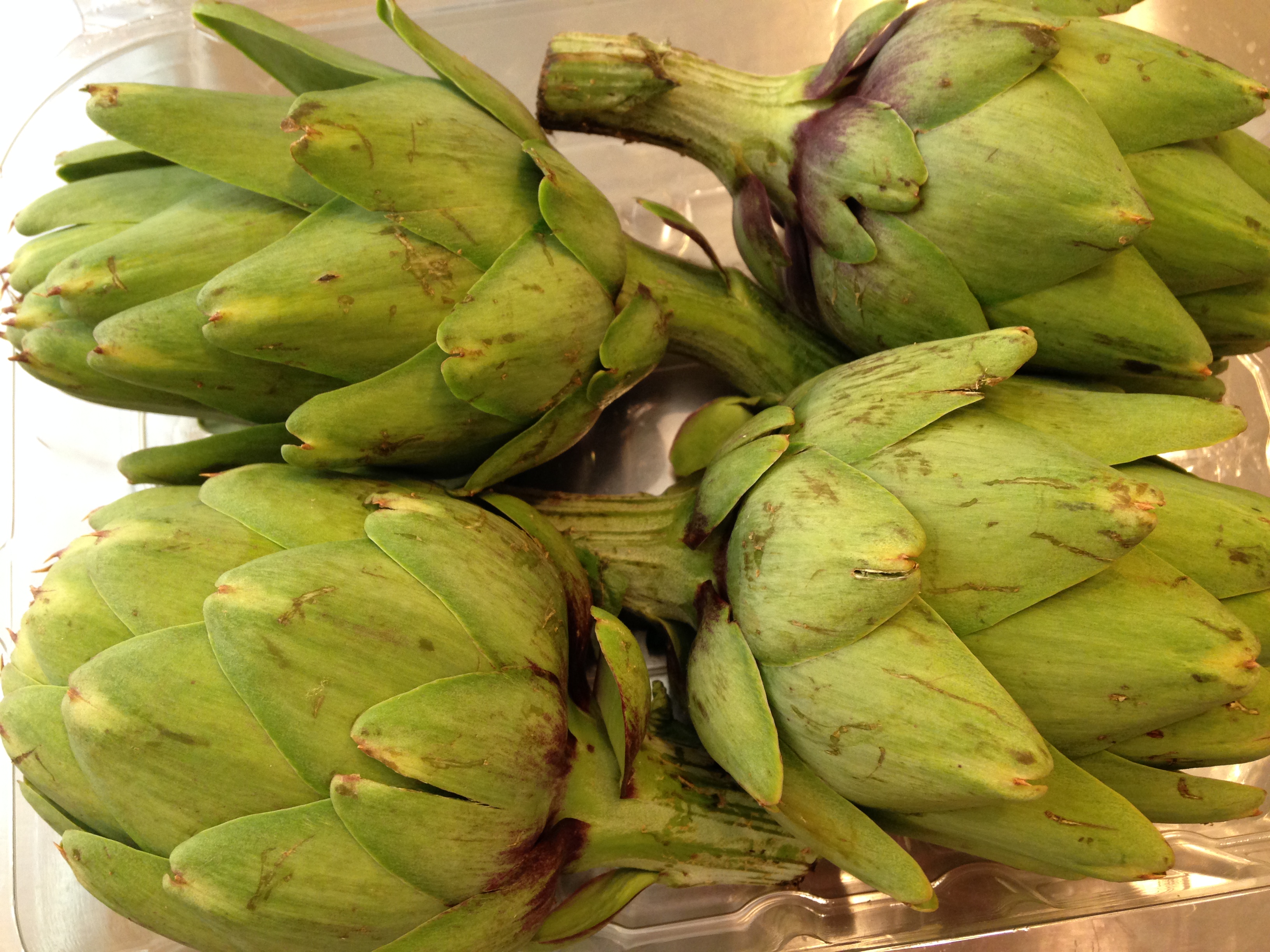
medium-sized artichokes

medium-sized artichokes

I wish I could remember the first time I understood an artichoke. It must have been early on because you would think that first encounter would be memorable. I should ask my mom: when did I first eat an artichoke?

And what a name. Artie Choke.  (Remind me to use that for a character in a story or play I will write.) And in Italian it’s even more fun: carciofo. Either way it’s the thistle I love.

How many times have you wondered: who ever figured out how to eat it? What other food do you throw most of it away? While you’re busy getting at its “core” which is its delectable gold? (Well, okay, a clam comes to mind.)

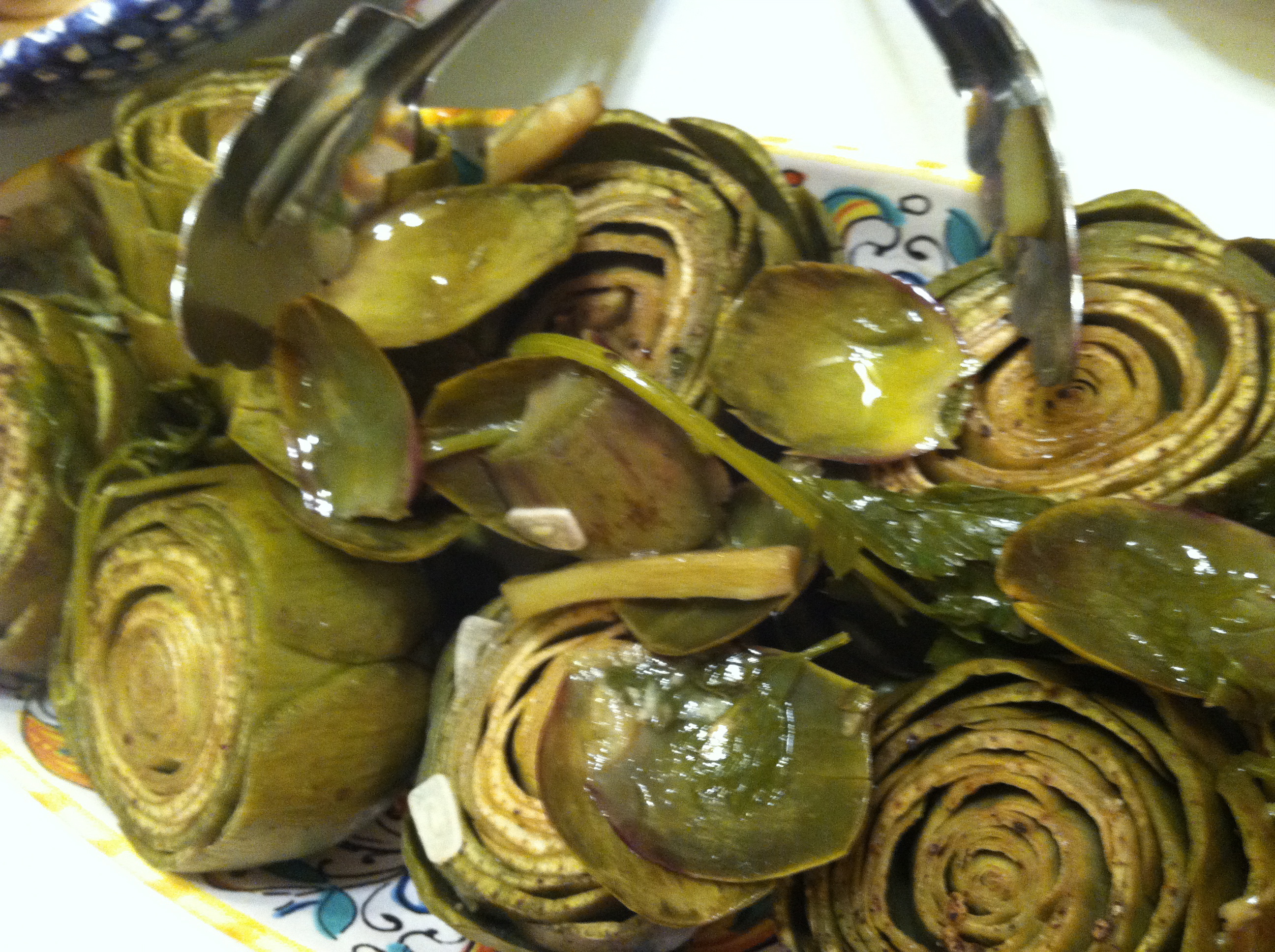
In my Italian-American family we had 2 ways of making them. Braised-boiled plain with garlic and parsley.

plain cooked artichokes

plain cooked artichokes

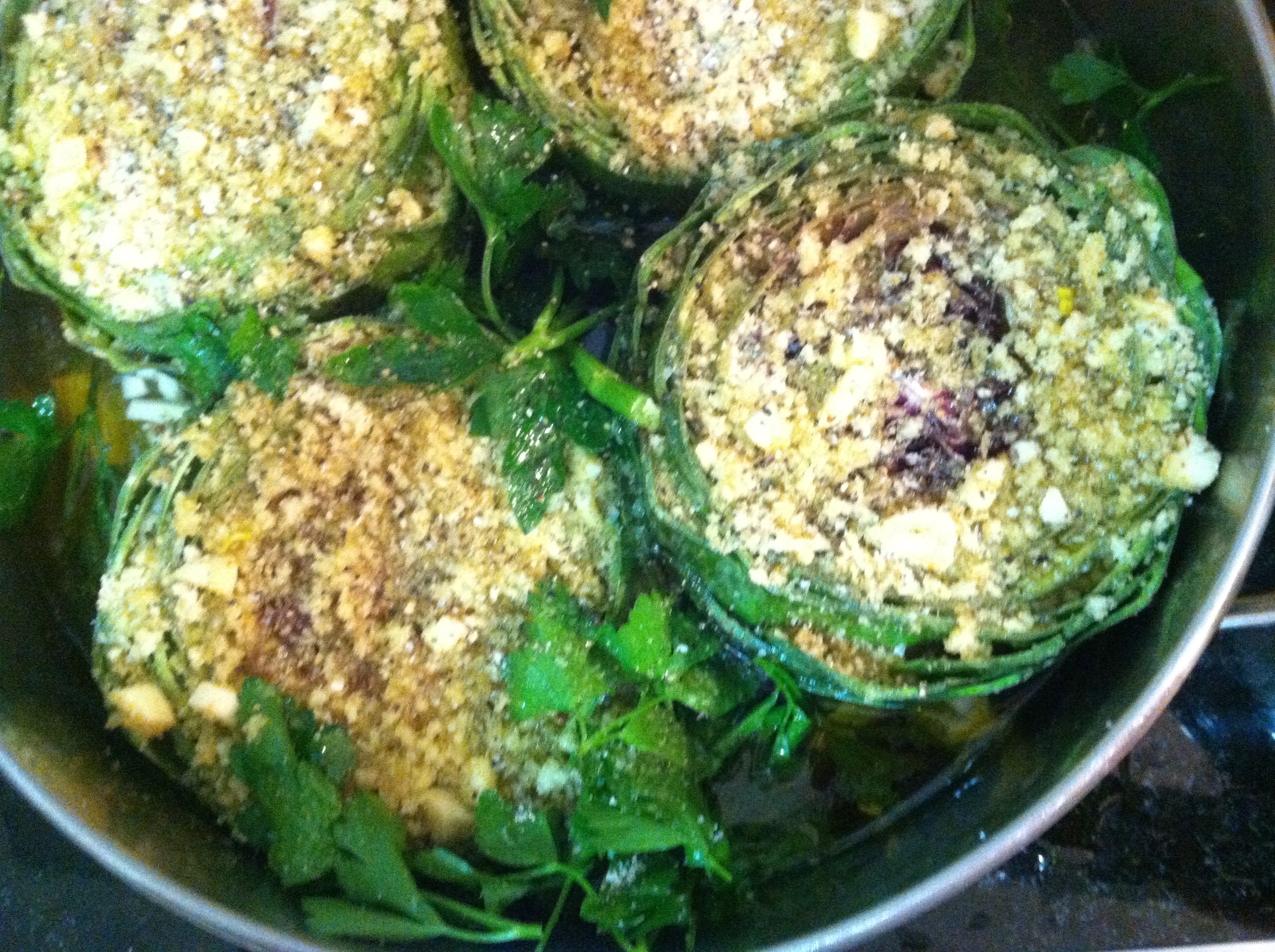
Or stuffed with flavored breadcrumb packed between the leaves. And braise-boiled.  We thought of the plain style as Sicilian (my Dad would only eat them that way). And the other style…Napolitana? Maybe.

stuffed artichokes

stuffed artichokes

I used to like just plain. Now I like stuffed. But frankly, I’ll eat them any way you can imagine. Have you had the Roman Carciofi alla Giudia (Jewish-style)? The artichokes are smashed flat and deep-fried. If you ever have the chance… ORDER THAT.

How to begin:

Cut off the top third…and the stem at the bottom. I often use a large bread knife to get through the tough leaves.

cut off the top of the artichoke

cut off the top of the artichoke

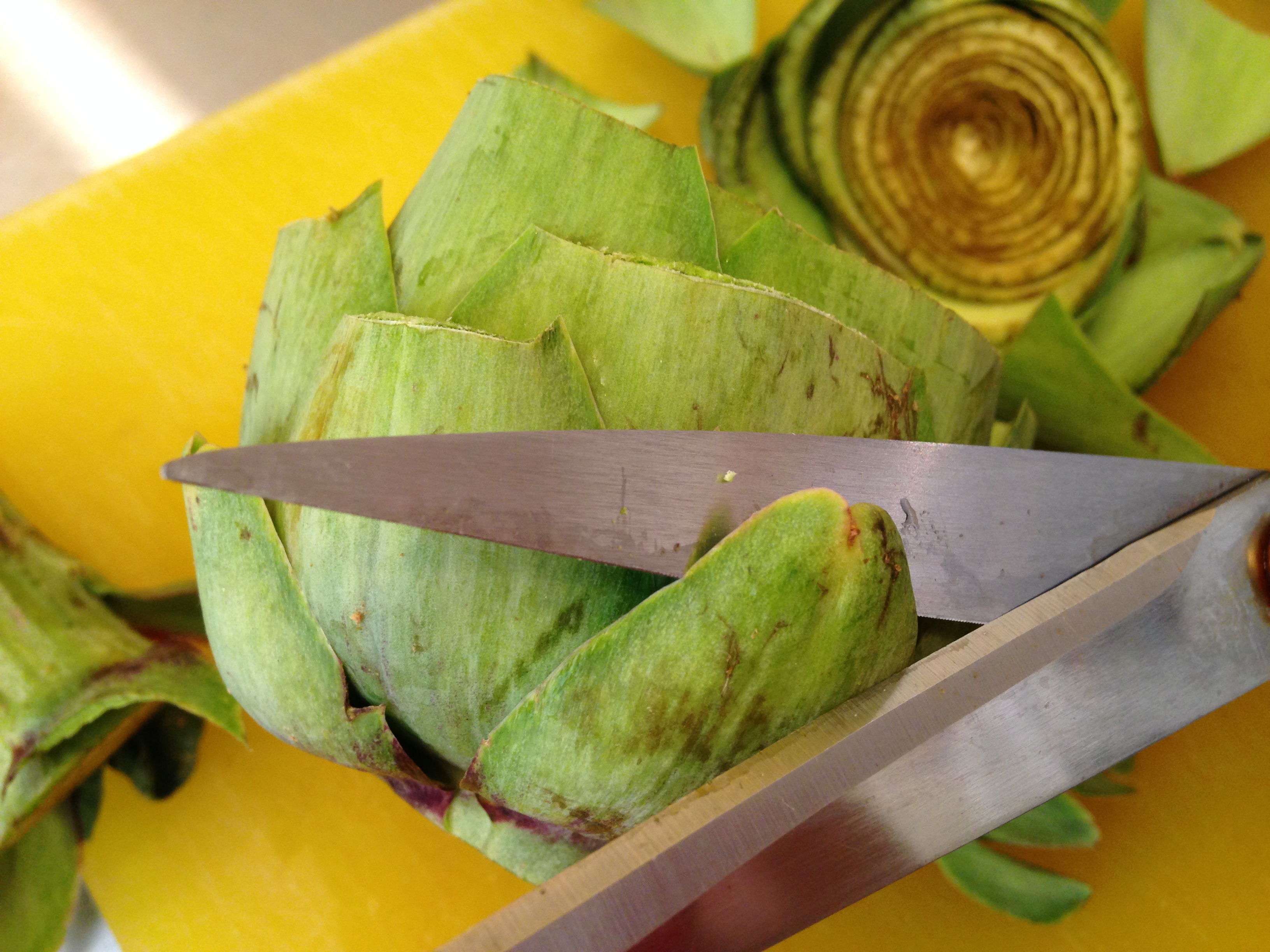
Snip the outer leaves that have thorns so you don’t get “stuck.”

snip off the thorns

snip off the thorns

I rinse them under cool water while trying to open them a little with some gentle pulls. Then shake them out to get rid of the drip-drops. Here’s my current favorite stuffing: panko, minced garlic, minced parsley, raisins and pine nuts.

stuffing ingredients

stuffing ingredients

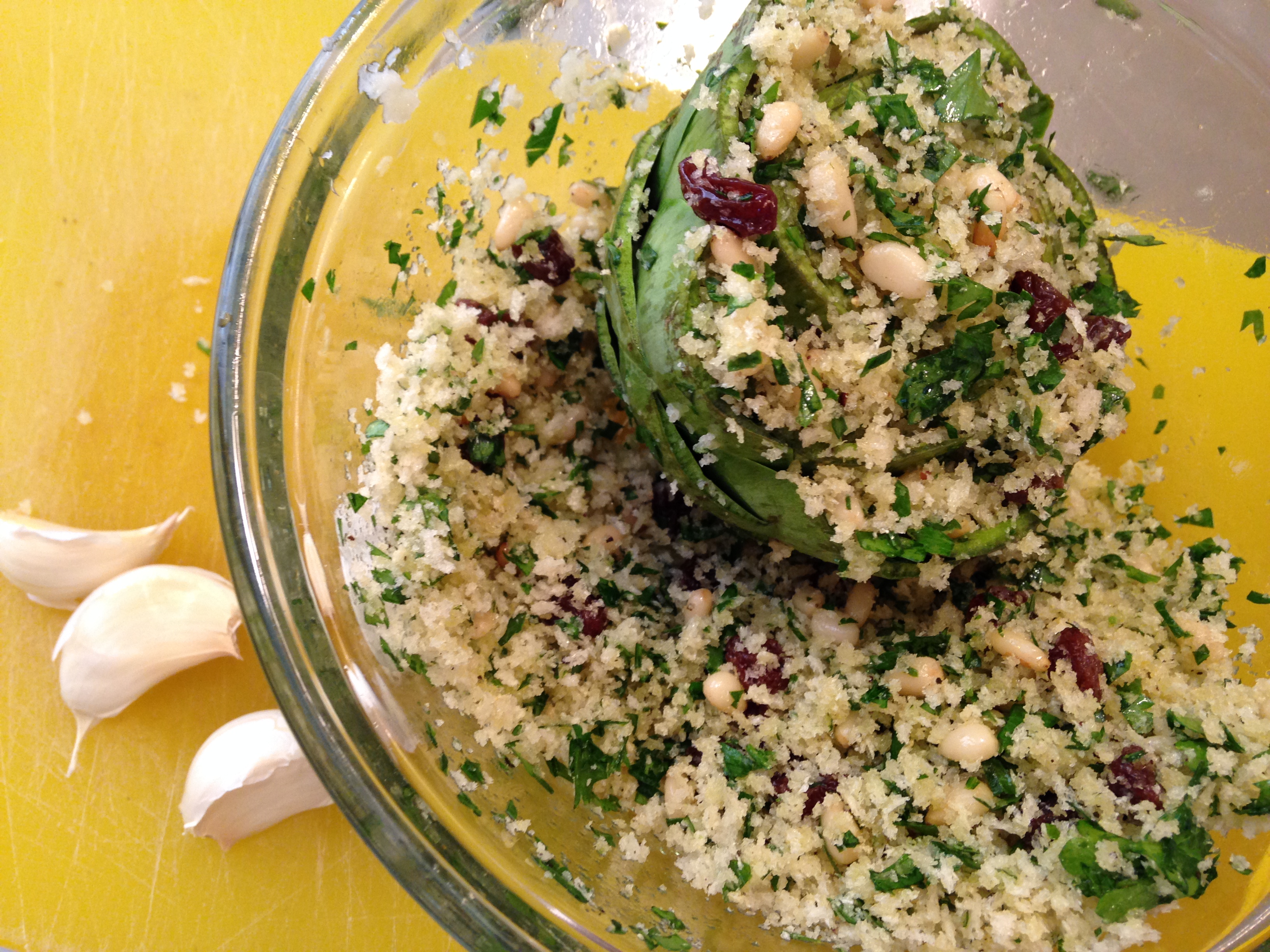
Mix that up and drizzle a little olive oil to moisten. Season with salt and pepper.

filling

filling

Pile a handful of stuffing on top then pull open leaves here and there getting the mixture to drop in. Or just push it in. But go easy, you don’t want to break the leaves. It’s a balancing act. Open the leaves…don’t break the leaves. The enigma of artichoke-stuffing.

stuffing artichokes

stuffing artichokes

Set them upright in a pot with a little heft to it (they will be simmering for a while). Add water till about halfway up the artichokes. Then drizzle olive oil on top of them and some for the water, too. Season the whole thing with salt.

artichokes in the pot

artichokes in the pot

Heat till the liquid starts boiling, then lower to a simmer. I set a cover on askew. Cook for 40 minutes to an hour. If you can pull a leaf off easily they are done. I like the hearts to get real tender.

Alternate tip. My mom is not a big garlic-in-your-food fan. She’ll smash a clove to start a tomato sauce, but then take it out before serving (it’s a common Italian move). So for less garlic impact, instead of adding minced garlic to the stuffing, just add some crushed cloves to the cooking water.

Don’t know how to eat an artichoke? Here’s a primer (I wish I could draw diagrams). Pick off the leaves (one by one), scrape off the bit of heart-meat at the bottom tip with your teeth. Yum. You can’t eat the whole leaf because it’s tough. As you get deeper into the artichoke the leaves get more tender and you can eat the whole leaf. Continue until you reach the spiky small leaves at the center. Scrape them away along with the fuzzy “choke” covering the heart at the bottom. Then you have the heart. You gotta have heart. And you especially gotta eat this whole entire heart.

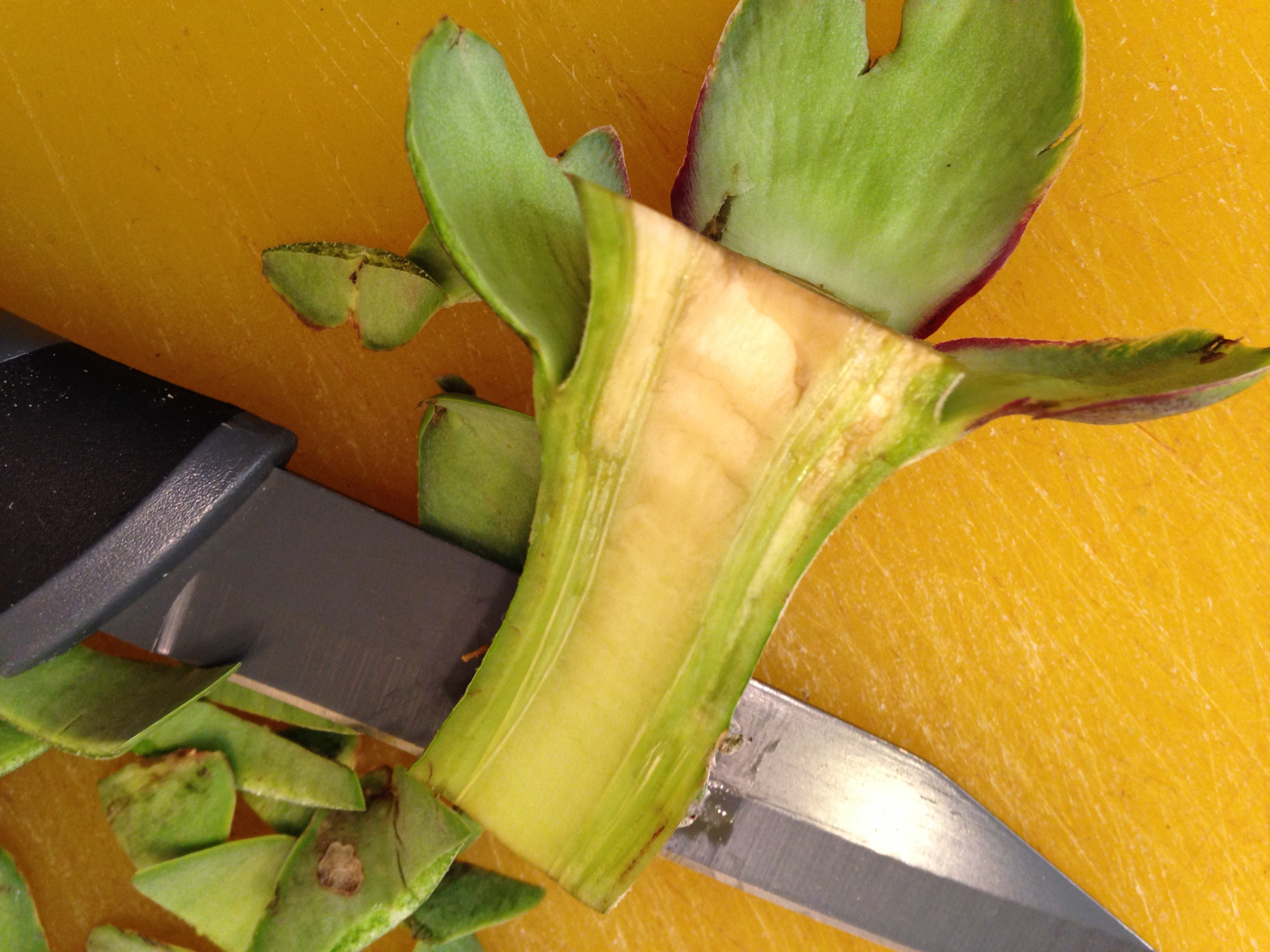
Also. Those stems you cut off? If you want to get meticulous, there’s a little bit of heart in those, too. It’s the white center.

there's even heart in the stem

there’s even heart in the stem

You can trim the stringy green all around the white center and drop the trimmed stem into the cooking liquid surrounded by its big brothers.

heart in the stem

heart in the stem

It’s just an added hit of yummy heart.

When I shared an apartment with my pal, Ginger, back in my theatre days, we ate artichokes all the time. She’s from California so she was as artichoke-crazy as me (you know, Castroville CA is the artichoke capital of the US). Her version was to boil them, then dip the leaves in melted butter as you nibbled. That’s another happy choice.

Once we drove into NYC to see a Broadway play (we lived in Huntington and worked at PAF Playhouse). Since we were budget-conscious we brought our dinner with us to eat in the car before the show. I have a dim memory-short-movie of us in the front seat of her VW van, in the dark, parked on a city street, hungrily scraping the leaves of our artichokes. But I have no idea what play we went to see.

at PAF Playhouse-my stage managing days

at PAF Playhouse-my stage managing days

Backstage at PAF Playhouse with 2 other PAF-ites: Christine & Bill. (Me, on the right.) Quite likely I had an artichoke for dinner.

(The Inevitable) Sausage and Peppers

sausage and peppers. you know you love it.

sausage and peppers. you know you love it.

It’s the quintessential Italian-American classic. Grilled, broiled, or pan-fried Italian sausages, with sautéed peppers and onions. The flavor (and the aroma) are exactly what it means to be Italian-American. It’s the “national” dish of the immigrants from Italy (especially Southern Italy) who made their home here in the “New” World.

For me, sausage and peppers originate on Mulberry Street during the San Gennaro Festival. The length of Mulberry Street is blocked to traffic. Arches of red and green lights shimmer over the pavement. Sidewalks are lined with overflowing food counters cooking and selling pizza, zeppole, cannoli, calzone, and sausage and peppers.

San Gennaro photo by Ed Yourdan via Creative Commons https://www.flickr.com/photos/yourdon/15402247580/in/set-72157648479562970

San Gennaro photo by Ed Yourdan via Creative Commons https://www.flickr.com/photos/yourdon/15402247580/in/set-72157648479562970

I think I must have been a teenager when I first pushed through those crowds. A group of us with a bottle of red wine in a brown paper bag in tow. Of course, I’ve been back many times throughout my NYC life, but in my later years it was actually a festival to avoid. Crowded. Touristy. The same ole, same ole.

San Gennaro photo by Ed Yourdan via Creative Commons https://www.flickr.com/photos/yourdon/15402247580/in/set-72157648479562970

San Gennaro photo by Ed Yourdan via Creative Commons https://www.flickr.com/photos/yourdon/15402247580/in/set-72157648479562970

But that doesn’t stop memories from glowing. And the sense-memory of downtown NYC air permeated with sizzling sausage, peppers and onions on a flattop–the ghost-taste of San Gennaro–gets me right into the kitchen to make some at home. An irresistible “gotta-have-it” urge.

When the urge strikes, I want this dish to cook fast. Here’s the fastest way I know how.

Slice 2-3 sweet peppers– red, green, orange, yellow, what you prefer. I think green has always been the standard, but I’m a fan of the other colors (green peppers have a lot more punch). And slice 2 medium onions. We’re looking for thin wedge-like slices.

cut up peppers & onions

cut up peppers & onions

Saute in a large saute pan with a little olive oil until softened. About 10-15 minutes. You don’t want it to cook forever because the peppers and onions will really start melting and attempt to disappear. Season with salt & pepper.

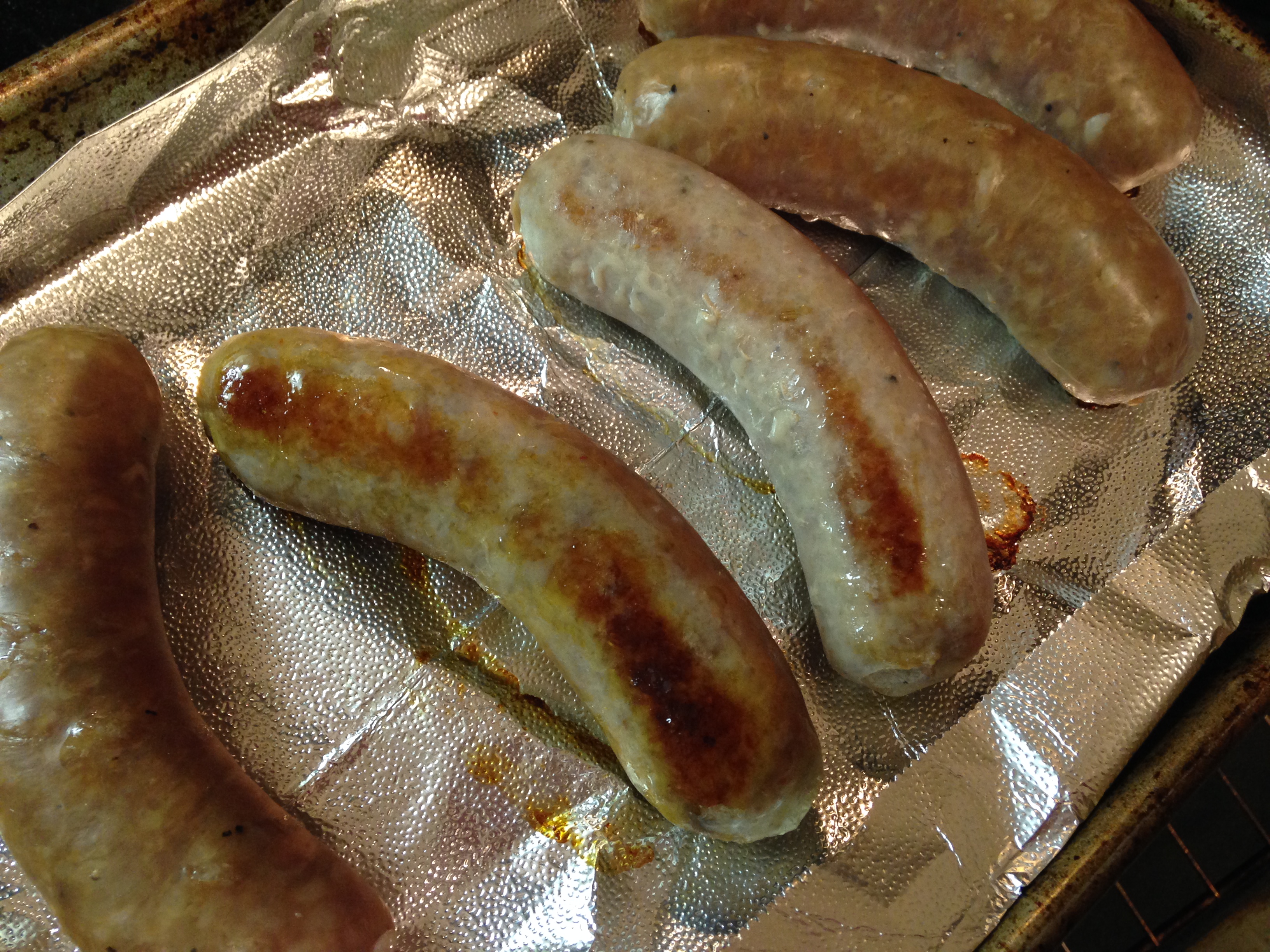
Meanwhile, get the oven to about 400 degrees. Poke 4-5 sausages in a few spots with a paring knife. Place them on a foil-lined sheet pan and roast until browned well on each side.

Sausages half-way browned

Sausages half-way browned

When they are cooked through, cut them in half with a diagonal cut. Add them to the already softened peppers and onions…

sautéed peppers and onions

sautéed peppers and onions

Let the sausages hang out in there for about 5 minutes or so (as you sauté on medium heat) until everyone gets acquainted and the flavors decide to get married. Then you’re ready to indulge. Of course, on Mulberry Street they will pile this concoction on a big Italian hero roll. I take the trying-to-avoid-bread-so-I-can-still-fit-into-my-jeans route. And just eat this wonder on a dish. Up to you!

sausage and peppers without the roll

sausage and peppers without the roll

How to Make Stovetop Espresso Coffee

The Joys of Espresso

The Joys of Espresso

My first encounter with stovetop espresso was in Rome in the late 1970’s. I shared an apartment with Grazia Enrica Brunelli in the neighborhood of Trastevere. Enrica, a quintessential Roman, made stovetop espresso every morning. That’s where I learned it. That’s where it became part of my morning routine. With its aroma and distinctive flavor, I bring Rome with me wherever I go. One sip and the Roman air swirls around me. I can hear the vespas speed by the window. I can elicit the unique aura that only umbrella pines and ancient ruins can muster into the atmosphere.

Rome: umbrella pines and ruins

Rome: umbrella pines and ruins

Bring Italy home for yourself. Here’s how to make the coffee. Then let your imagination channel the rest of Rome into your morning. Evening. Afternoon. This elixir summons any part of Italy into your immediate realm.

And it’s easy to do.

I have a small collection of espresso pots. (And 1 napolitana pot.)

espresso and napolitana pots

espresso and napolitana pots

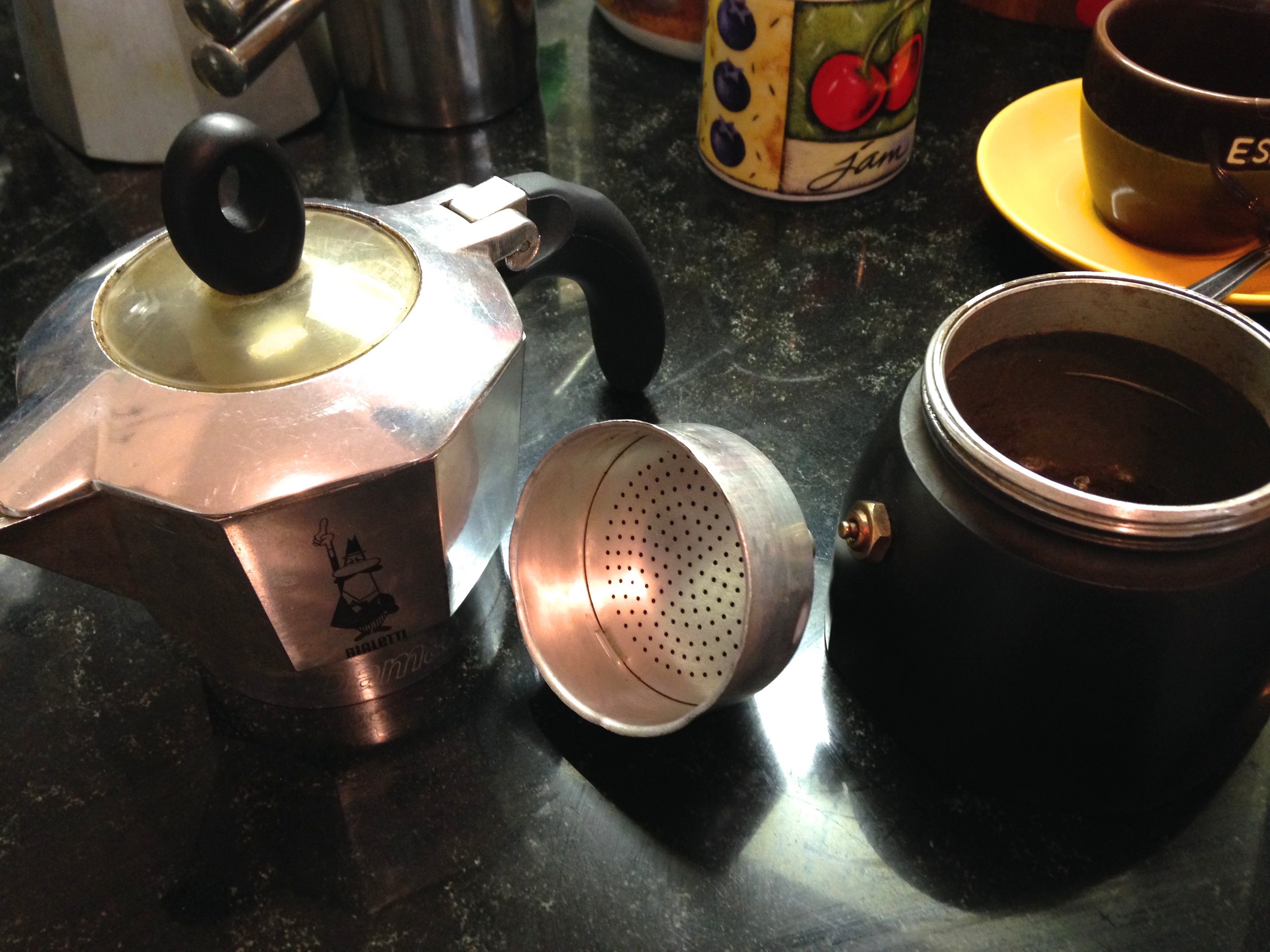
They are easy to find online, in housewares stores, TJ Maxx, too. But do make sure you get one that is made in Italy. There are some impostors running around that are Made in China (with Italian names on the labels). I haven’t encountered one China-made espresso pot that is worth getting. The most popular Italian-made pot is Bialetti Moka-Express. Look for the little man pointing above his head.
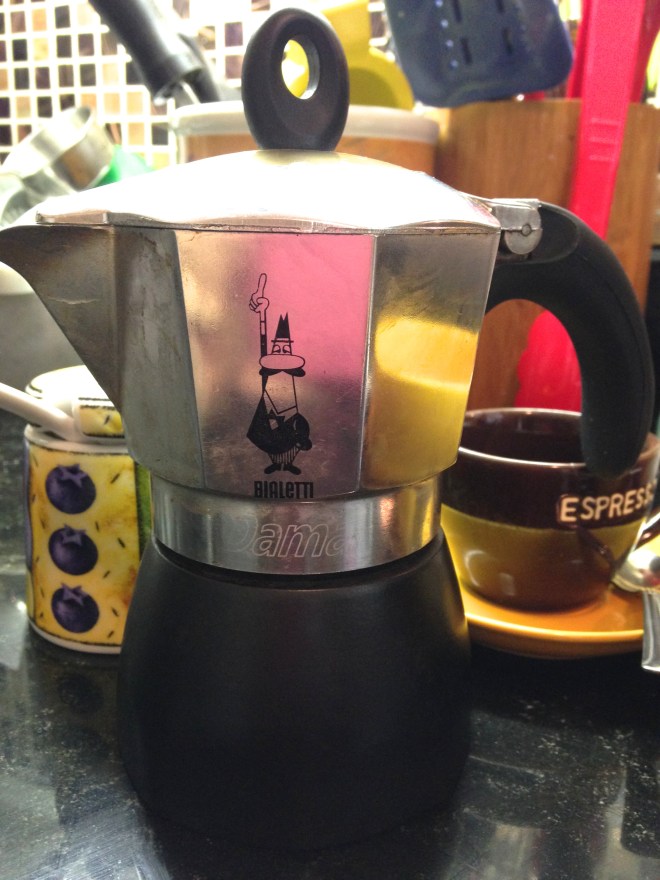
Bialetti Moka-Express

Bialetti Moka-Express

You’ll find different sizes. When they say 6-cup or 4-cup remember they are talking espresso size, the size of 6 or 4 espresso “shots.” So choose accordingly. Families keep these pots for generations. There’s a rubber washer inside that can be replaced if the original deteriorates (that might take more than 20 years!). Even if the black handles break off, people keep them since the pot still works fine without it (use a bigger pot holder to handle).

How to make stovetop espresso: Unscrew the pot. Take out the metal filter nestled in the bottom.

unscrew the espresso pot

unscrew the espresso pot

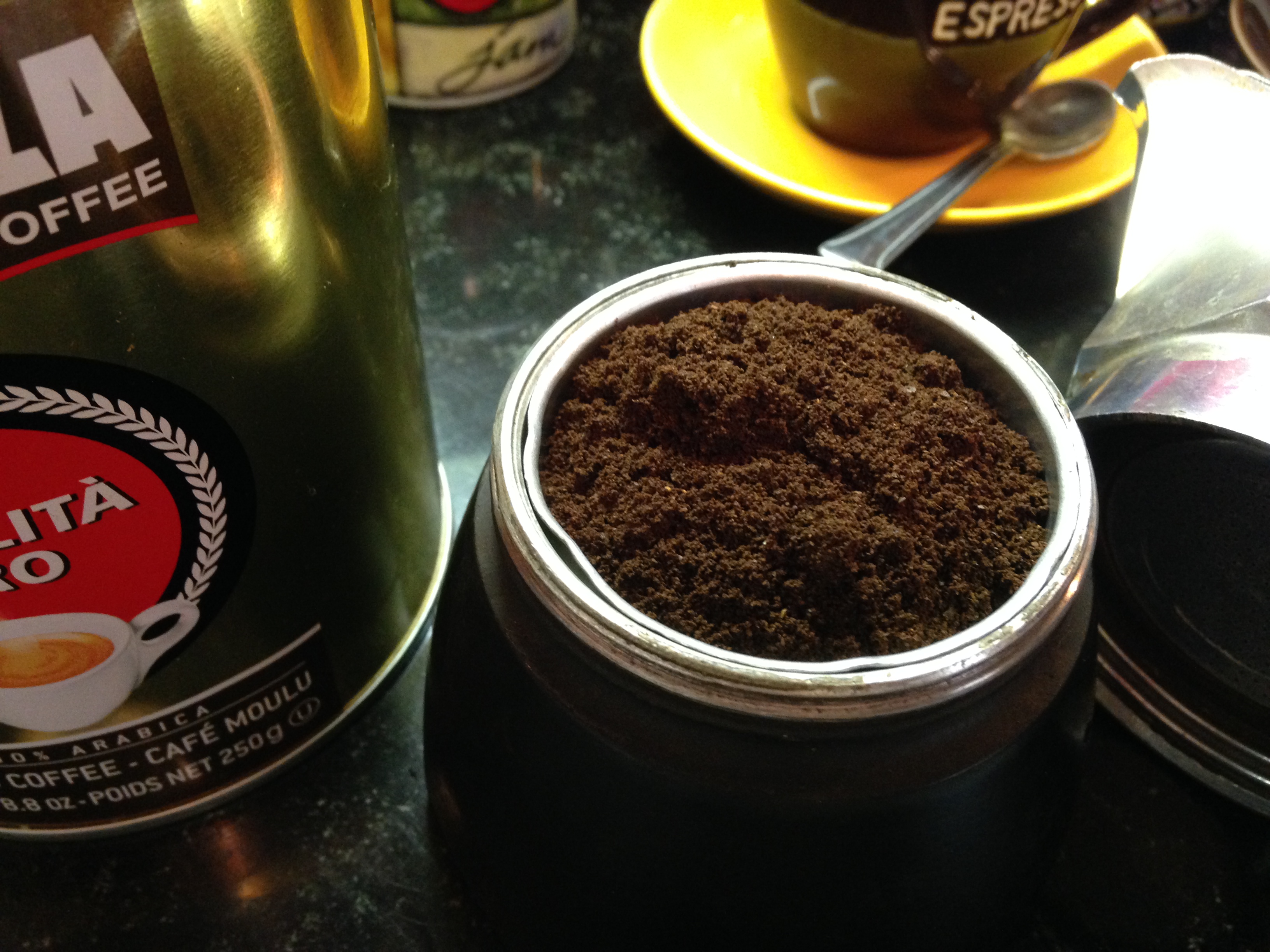
Fill the bottom with cold water up to the metal steam hole. Place the metal filter in, and fill the filter with espresso coffee.

coffee in filter

coffee in filter

IMPORTANT: for the best flavor use Italian espresso coffee. It’s roasted darker than French roast and delivers that characteristic flavor. I like the brand Lavazza.
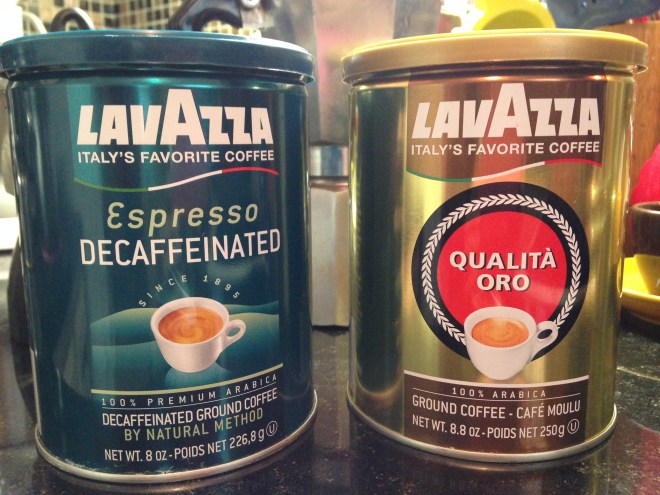
Lavazza coffee

Lavazza coffee

Screw the top onto the pot tightly. Too loose and water will steam out of the sides instead of up through the ground coffee. Place pot on your stovetop burner, gas or electric. I try to place it so that the handle is not over the heat.
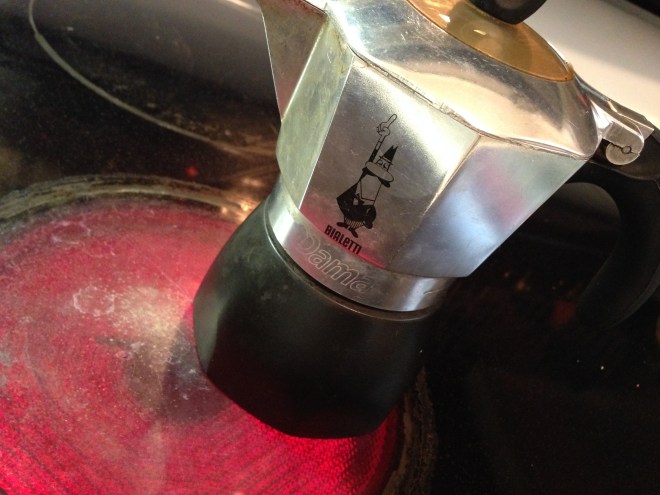
espresso pot on stove

espresso pot on stove

I set the burner on high or medium high. Stay by and watch. The water in the bottom of the pot will heat up, boil, and push up thru the coffee (“espress”) and perk out thru the hole in the top of the pot, filling the top of the pot with finished coffee.
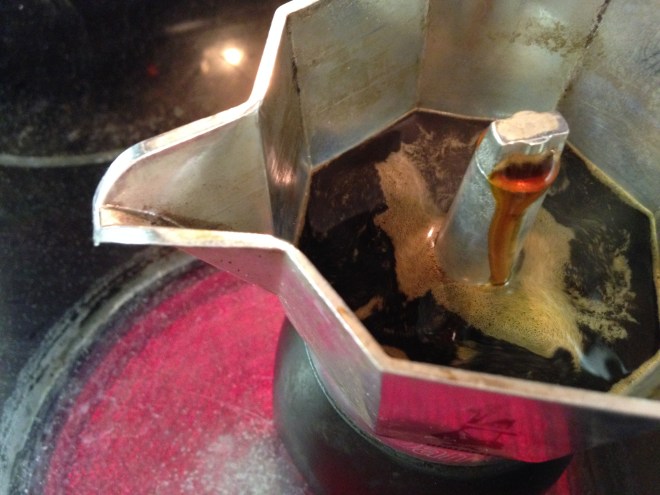
coffee spouting

coffee spouting

When the water starts hissing and pushing up, I usually lower the heat some. Turn off heat or remove pot when the top is almost full so that it doesn’t boil over.

Be careful handling the hot pot. Pour your espresso.

pour your espresso

pour your espresso


Add milk if you like (you can warm the milk first, that’s how Enrica did it. I have usually have less patience and just add a bit of cold milk.) (I also like sugar!)
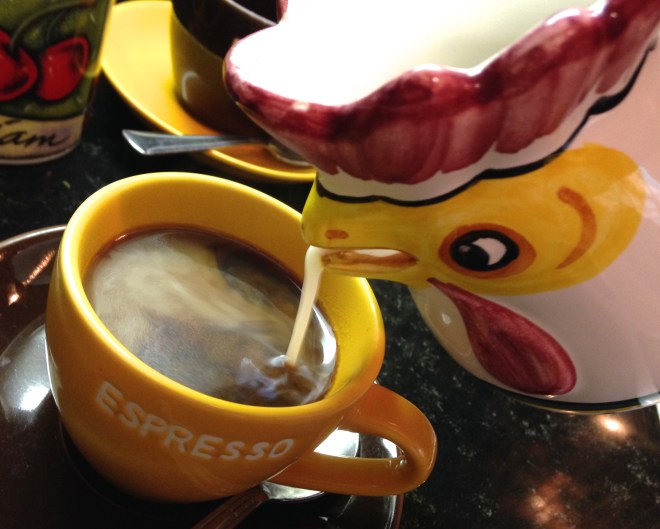
pouring milk

pouring milk

Ecolo! Il caffe tuo e pronto, signora, signore, signorina, ragazze!

When cleaning your pot (wait until it’s cool enough to handle), just rinse it well, you don’t need to use soap. These pots get “seasoned” and the residual coffee oils add to its personality. I once lent a pot to a neighbor and it came back shiny clean. They thought they were doing me a favor!

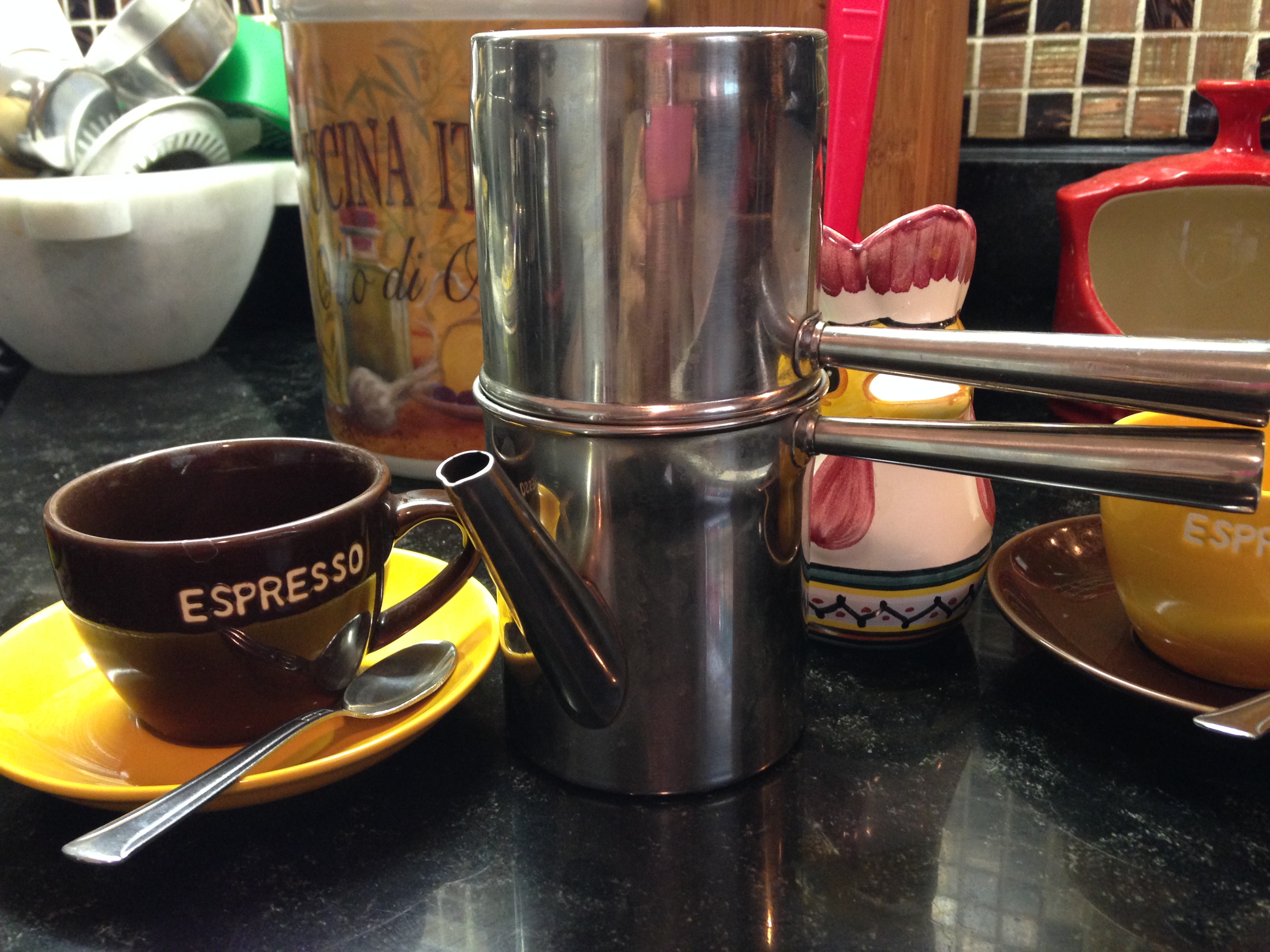
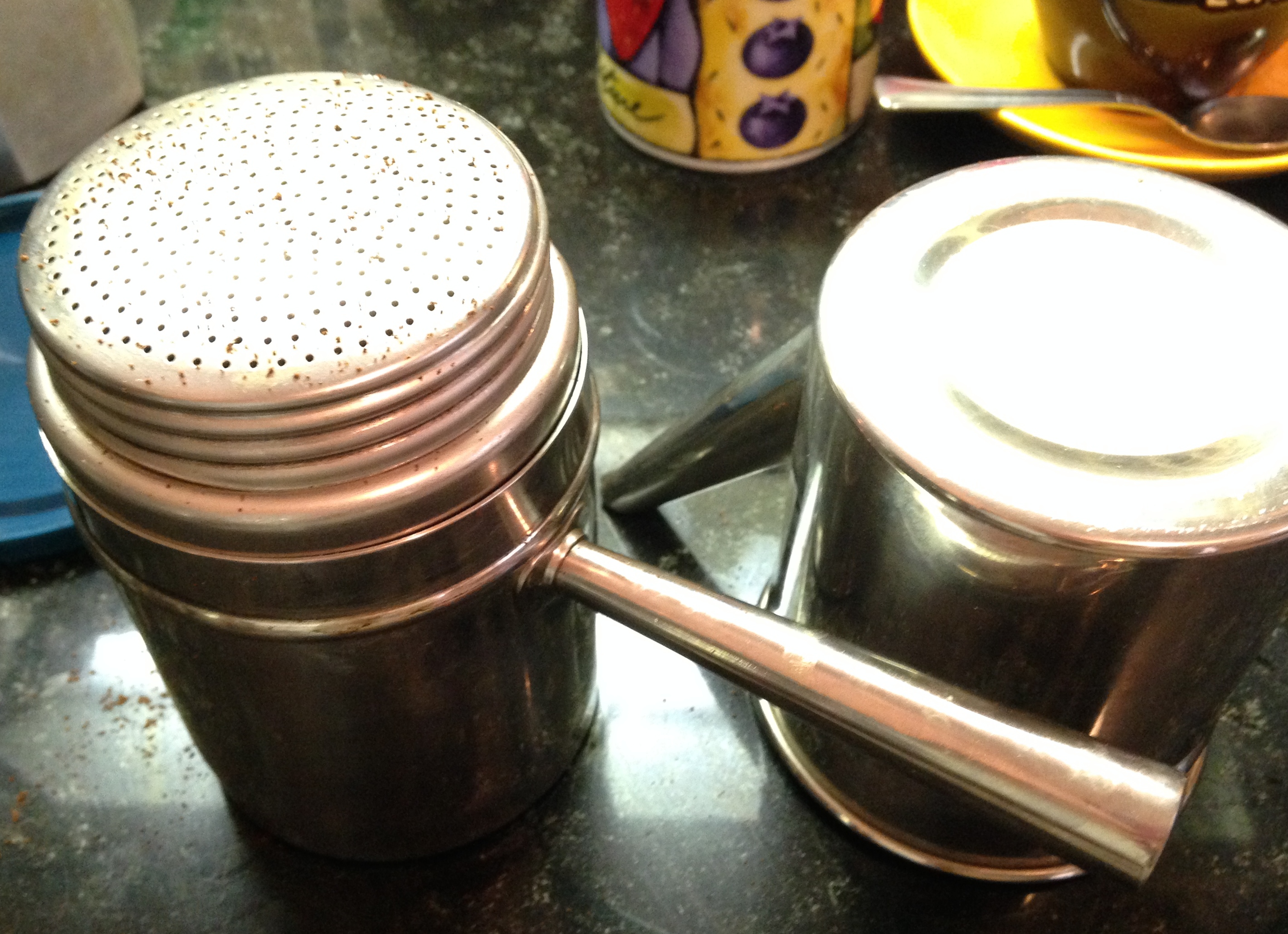
Now you might be interested in the other stovetop Italian coffee method using the pot known as “napolitana”…which means Naples-style.

napolitana pot

napolitana pot

This style is similar to a drip pot but you’re still using espresso coffee. The coffee it creates is a little smoother than the other espresso–not so intense.

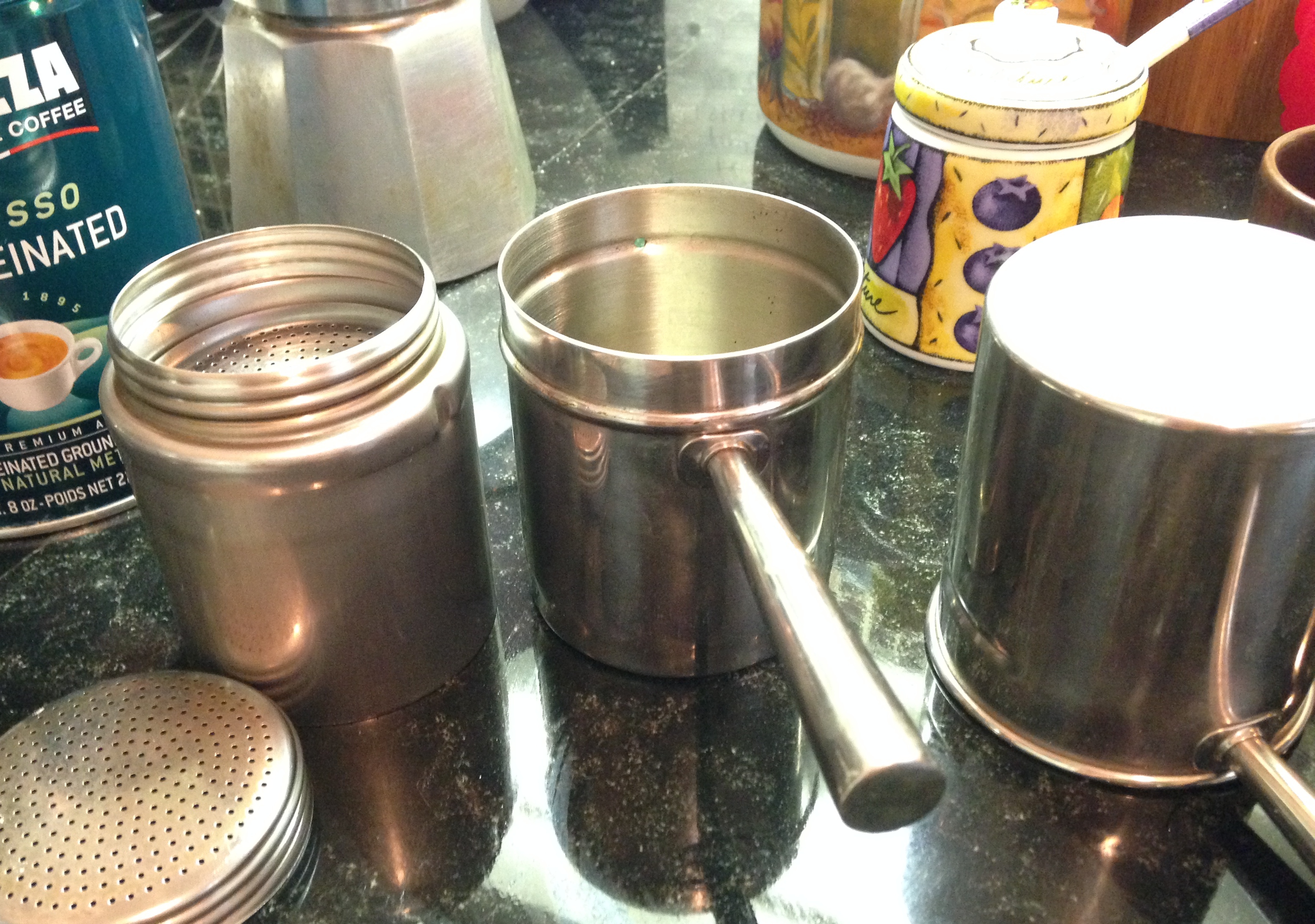
Take the pot apart.

napolitana pot

napolitana pot

Fill the bottom (the half without the spout) with water up to the little hole. Unscrew the filter and fill with coffee.

coffee in napolitana filter

coffee in napolitana filter

Screw top on filter and place filter, coffee end up, into the water of the bottom half.

filter in napolitana pot

filter in napolitana pot

Push the spout half on top, lining up the handles, and place on the burner (keep handles away from heat and they’ll stay cool for handling).

napolitana pot on stove

napolitana pot on stove

Listen for the subtle bubbling sound signaling the water inside is almost boiling. Shut the heat and carefully turn the pot upside down, so the spout half is on the bottom. The hot water will drip through the filter. This will take about 3 minutes, so wait for it to brew…then enjoy!

Here’s another pot I have. It’s a “2-cup” but just enough to fill my tiny mug. I love making my own little pot of espresso. This pot my aunt brought back from Sicily. Buon caffe!

1-serving pot

1-serving pot

St. Joseph’s Day Cakes

St. Joseph cake

St. Joseph cake

March 19th is Saint Joseph’s Day. Time to move on from Patrick and celebrate Saint Joseph and anyone whose name is Joseph. This is your day!

For the last few years I’ve been wanting to make Saint Joseph cakes. Individual-sized pastries luscious and creamy. But then March 19th would come and go and there I’d be with no cake. Not this year. I wasn’t going to let that happen again. I’ve eaten them in NY, where you can find them at Italian bakeries. But how do you make them?

I scanned the Web for recipes. I discovered there’s more than one way to make a St. Joseph’s cake. Most recipes used a pate a choux batter. But you can fry the cakes or bake them. Stuff them with whipped cream. Or ricotta. Or a combination of both. Or stuff them with custard cream. Which one is right? Which one authentic? I couldn’t find the answer. Maybe they’re all correct. Each baker with their own authentic recipe.

So I made an executive decision (being the CEO of my own kitchen). I’m gonna use my pate a choux recipe and my custard cream recipe and make St. Joseph cakes!

First make the custard since it needs to be chilled. 5 egg yolks 3/4 cup sugar…

egg yolks and sugar

egg yolks and sugar

Beat with the paddle attachment until pale and thick…

pale and thick

pale and thick

Beat in 3 tablespoons of corn starch. On the stove heat 1 1/2 cups of milk to scalding. Slowly add hot milk to the egg mixture while machine runs on low. Then return the whole mixture back to the pot and heat on medium, stirring with a wooden spoon, until thick. About 5-7 minutes. Stir in 1/2 teaspoon vanilla and about 1/4 cup rum. Pour into a bowl and place plastic wrap on top of the custard surface. Chill in the refrigerater until cooled.

custard

custard

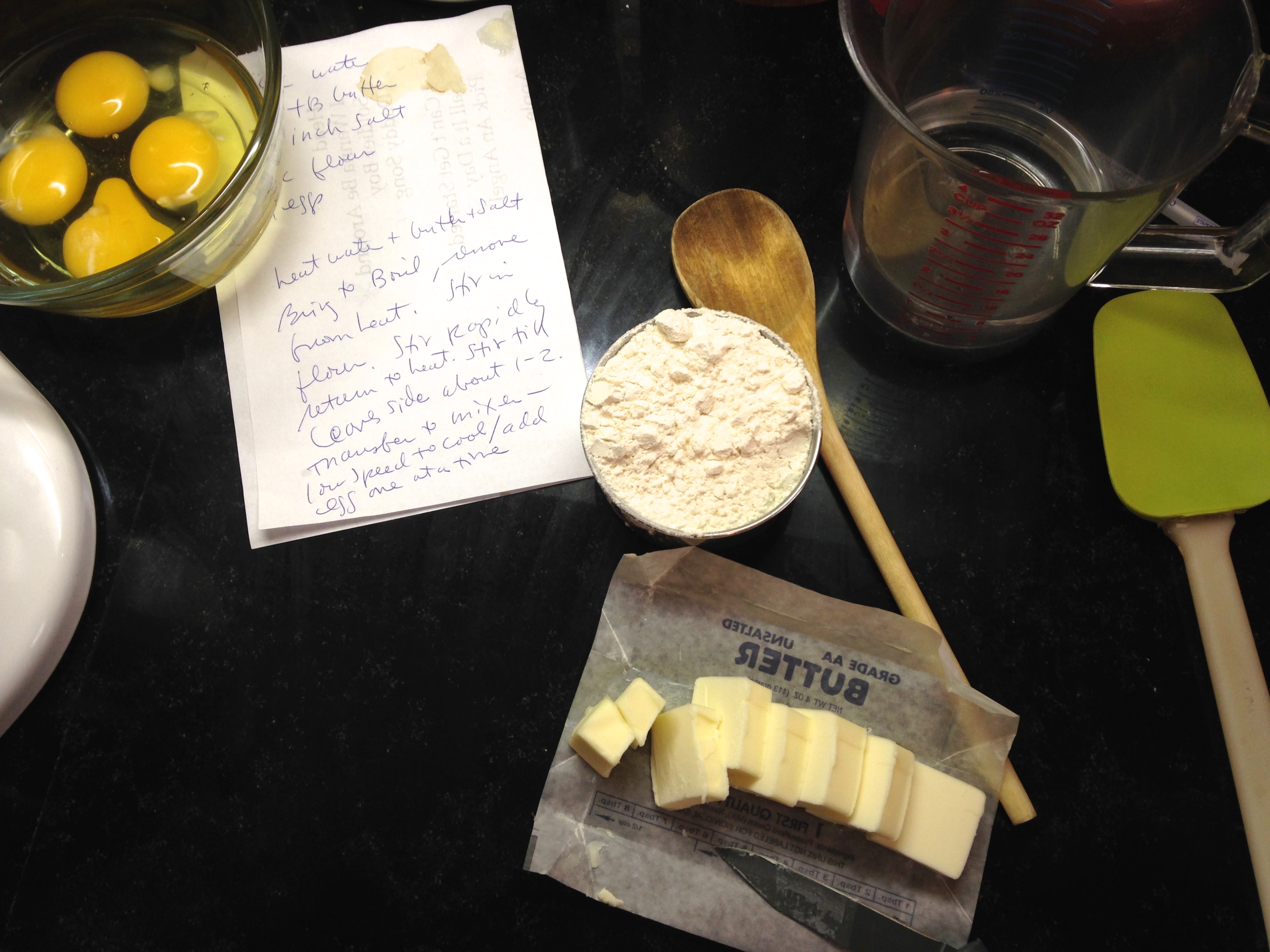
Now make the pate a choux.

pate a choux ingredients

pate a choux ingredients

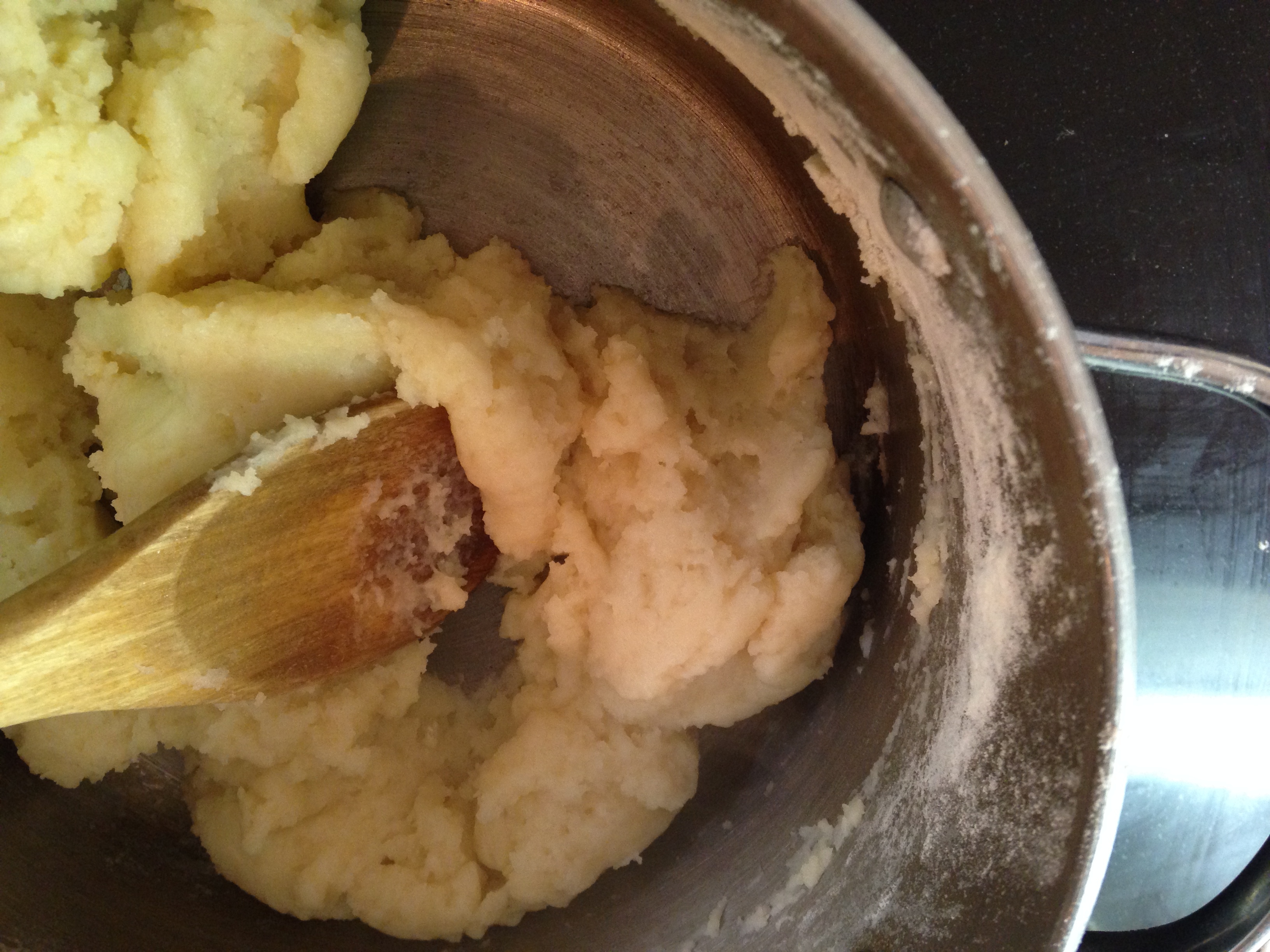
In a medium saucepan heat 1 cup of water, 6 tablespoons of butter and a healthy pinch of salt. Bring to a boil. Then take off the heat and whisk in 1 cup of flour till combined well. Put pot back on the heat and switch to wooden spoon. Stir rapidly until dough is dry and leaves the sides of the pan easily.

dough in pan

dough in pan

Transfer the dough to the bowl of a stand mixer and mix on low for a few minutes to cool down the dough. Then add 4 eggs, one at a time until each is incorporated.

pate a choux batter

pate a choux batter

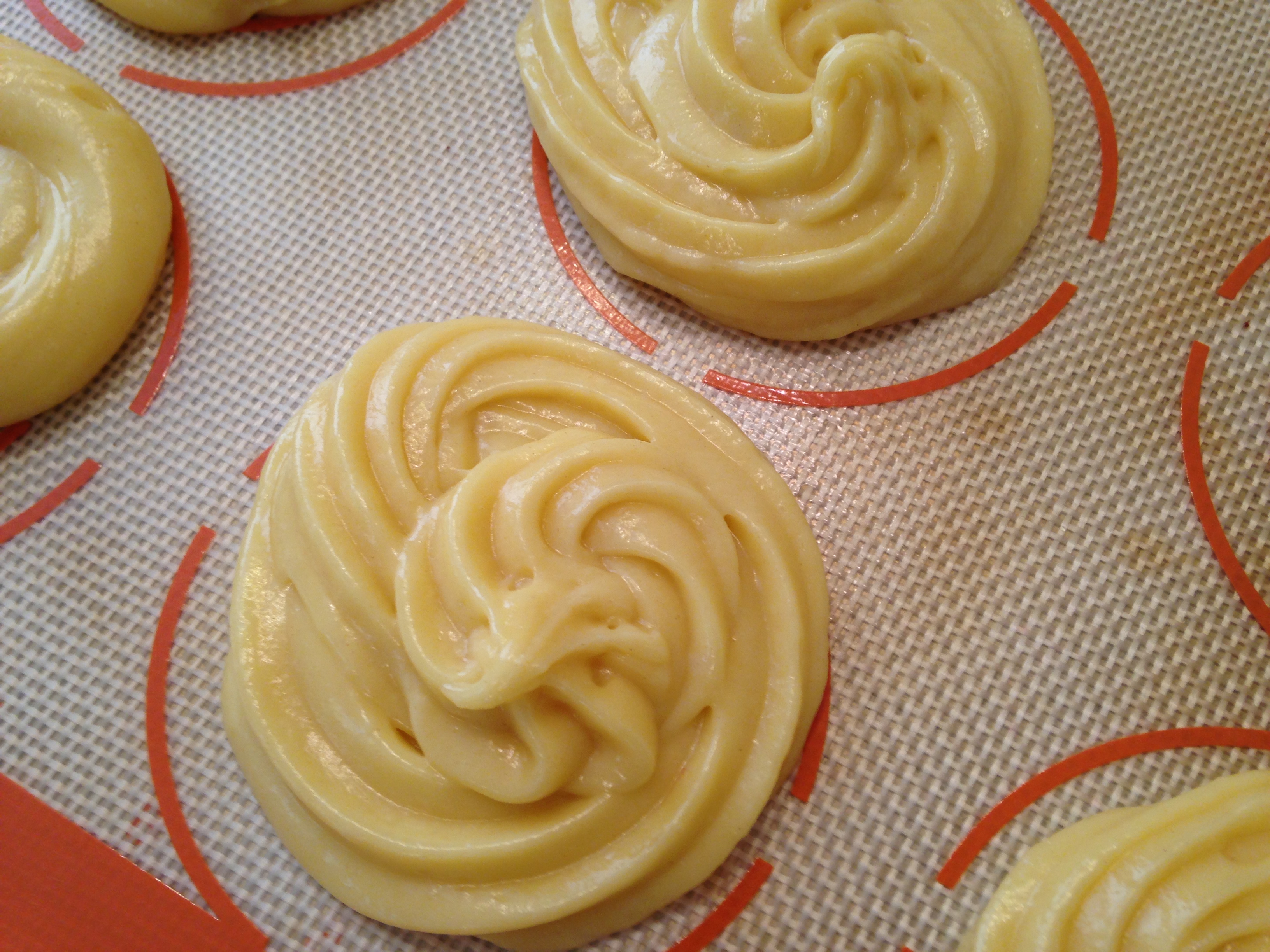
Now the fun part. Get out your piping bag with a large star tip. Pipe a 2-inch circle and swirl back into the center.

piped dough

piped dough

Bake at 425 for about 15 -20 minutes until puffed. Turn down oven to 350 and bake until deep golden, about another 10 minutes. Once out of the oven I poke each pastry with a toothpick to allow steam to escape. Let cool completely. Then cut in half horizontally and fill with custard cream. Sprinkle some powdered sugar on top.

St. Joseph Cake with custard cream

St. Joseph Cake with custard cream

Yes. You’re allowed more than one. Especially if your name is Joseph.

Making a Good Thing Better – Italian Shepherd’s Pie

Italian Shepherd's Pie

Italian Shepherd’s Pie

Well. It’s arguable. Is this better than the original? Maybe they’re 50-50…equally wonderful. All I know is you get some tasty meat topped with something creamy and you probably can’t go wrong. The original Irish Shepherd’s Pie starts with a layer of ground seasoned beef, dotted with peas and carrots, topped with creamy mashed potatoes and baked in the oven until the potato top gets golden. Good, right?

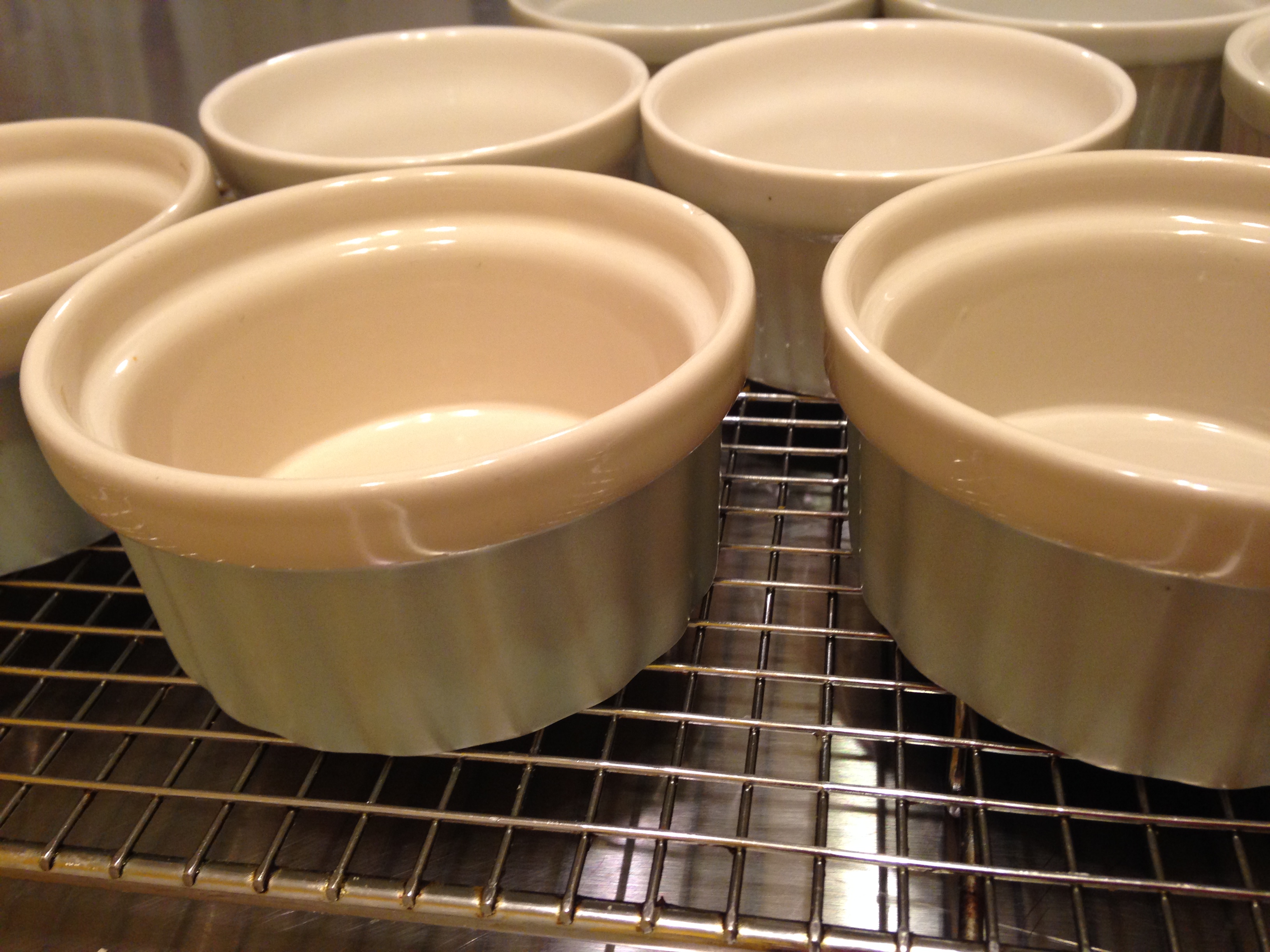
Here’s my version (since it seems I only have Italian ingredients in my kitchen). And I’m obsessed with cute, small portions, so these are done in 4-5 oz. ramekins–individual servings.

ramekins for Italian Shepherd's Pie

ramekins for Italian Shepherd’s Pie


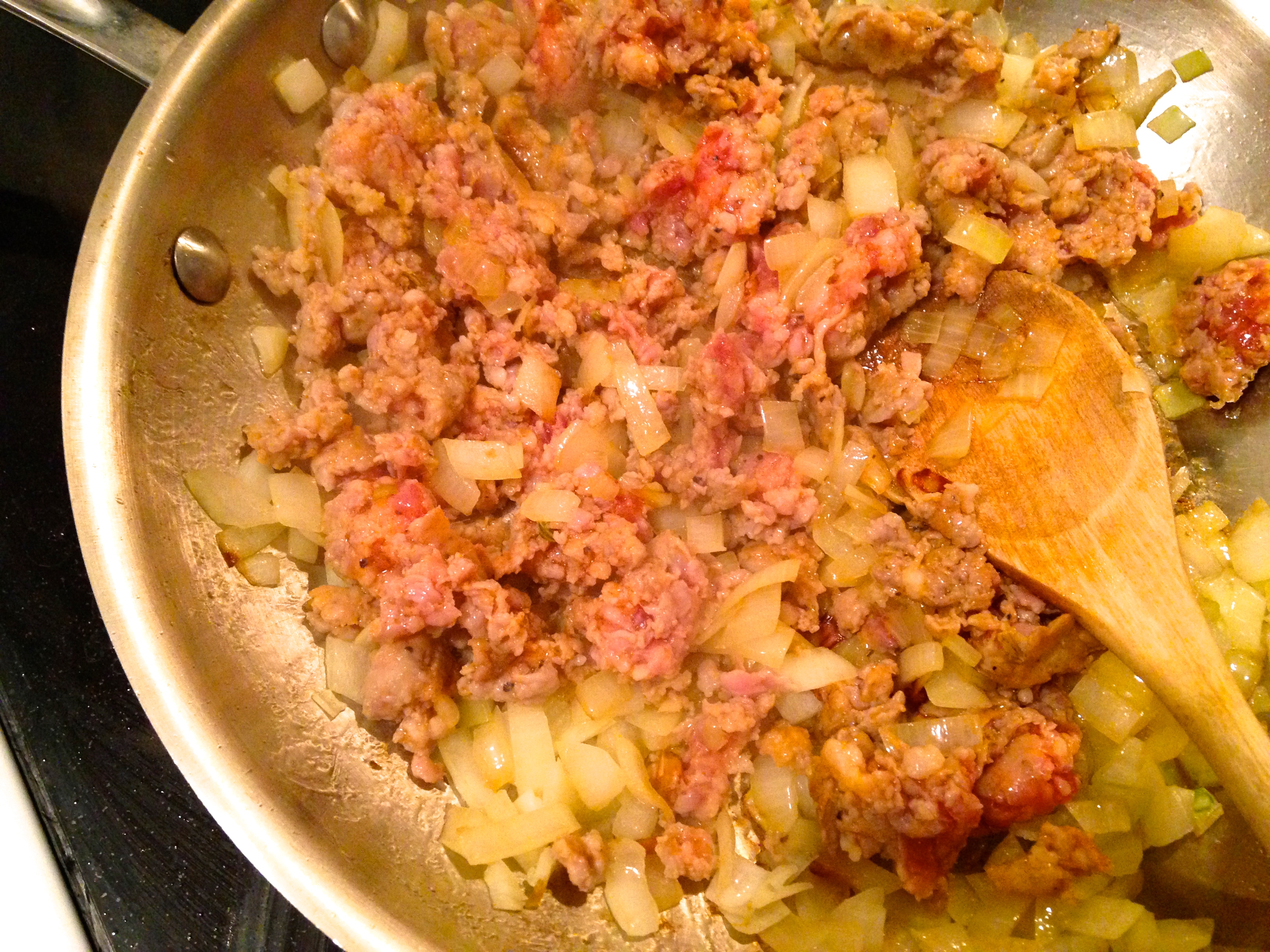
Cook up the ground beef, but add some broken up Italian sausage, too. And sautéed onion.

Sausage and onion sautéing

Sausage and onion sautéing

Yes, add the peas, but also add some diced tomato (Italian, remember?). That’s your bottom layer.

Sausage, onion, beef, tomato & peas mixture

Sausage, onion, beef, tomato & peas mixture

The top: no potatoes. Instead, RICOTTA. (I can’t stay way from the stuff). Mix ricotta with some diced or shredded mozzarella, add some grated parmigiano, salt & pepper, and an egg yolk. Mix well.

Ricotta, mozzarella, parmigiano, s & p, egg yolk

Ricotta, mozzarella, parmigiano, s & p, egg yolk

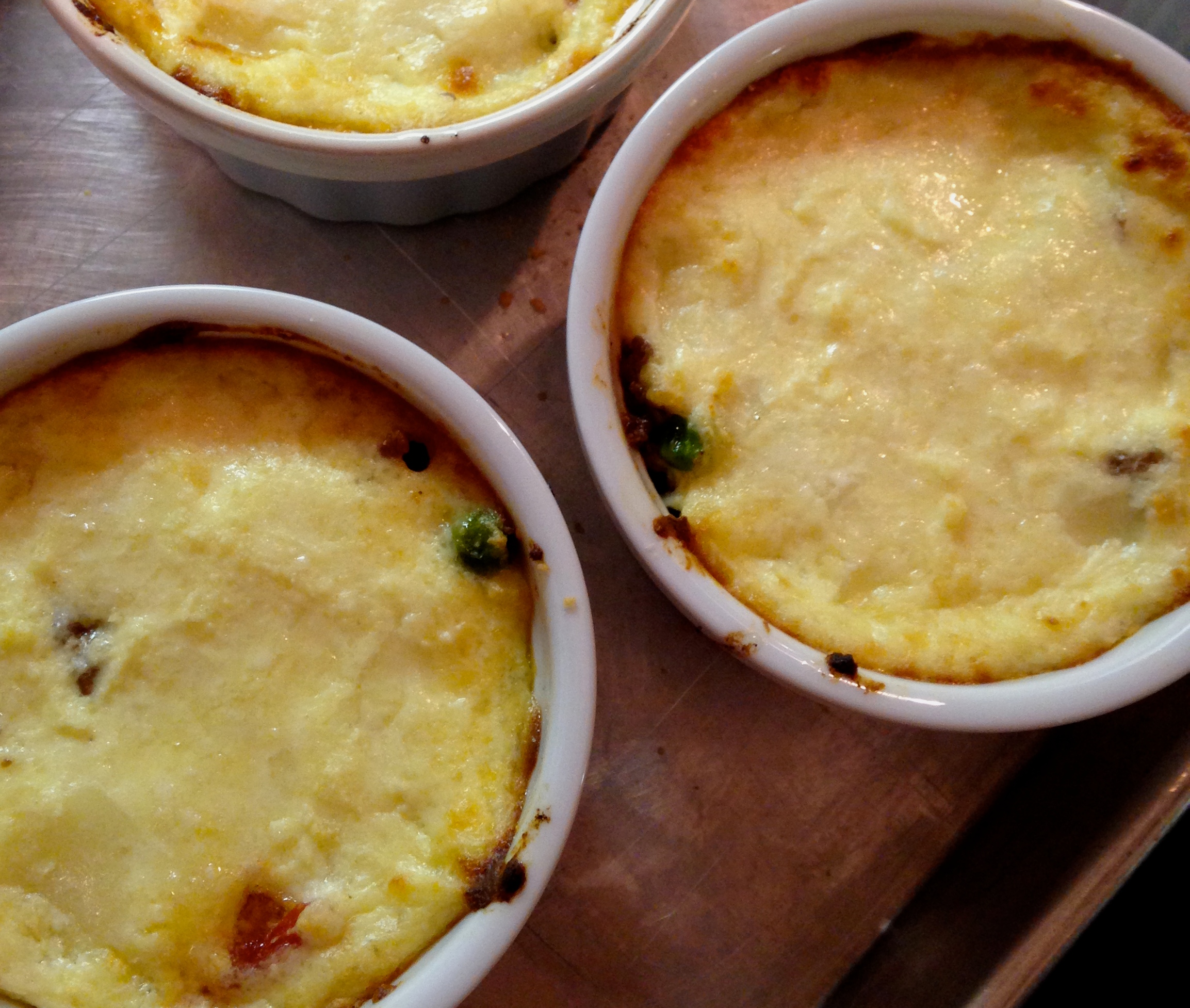
Top your meat with this swirly, swoon-worthy concoction. Sprinkle some grated cheese on top. Bake till golden.

Italian Shepherd's Pie

Italian Shepherd’s Pie

The Irish becomes Italian right before your eyes.

A Favorite Corner of Rome

A Favorite Corner of Rome

Individual Italian Shepherd Pies

3 tablespoons olive oil

1 medium onion, diced

2 Italian sausages (mild or hot, your preference)

1 lb. ground beef

1 15-oz can diced tomatoes

1/2 cup peas

1 lb. ricotta cheese

1/2 lb. shredded mozzarella(use a box grater)

1/4 cup grated parmigiano

2 egg yolks

salt & pepper to taste

Preheat oven to 425 degrees F.

Heat the oil in a large sauté pan, then add onion and cook 2-3 minutes until softened. Cut the sausages in half and push out the meat from the skins. Break up in sauté pan and cook with onion, 2 minutes or so. Add ground beef. Break up in pan and cook thru until the meats are browned. Add the tomatoes and peas. Season with salt & pepper. Cook 5 minutes more.

In a medium mixing bowl, stir together the cheeses and egg yolks. Season with salt and pepper.

Divide the meat into 10 or 12 ramekins leaving 1-inch open on top. Divide the cheese mixture on top of the meat. Smooth gently to cover meat with a spoon. Place ramekins on a sheet pan. Bake until golden on top, about 20 minutes until golden.

(If you try it, let me know how it goes!)

FYI: Click here for a link to my cooking segment on WSMV-TV More at Midday demo’ing this recipe!


Butternut Squash Gnocchi w Sun-Dried Tomato Sauce

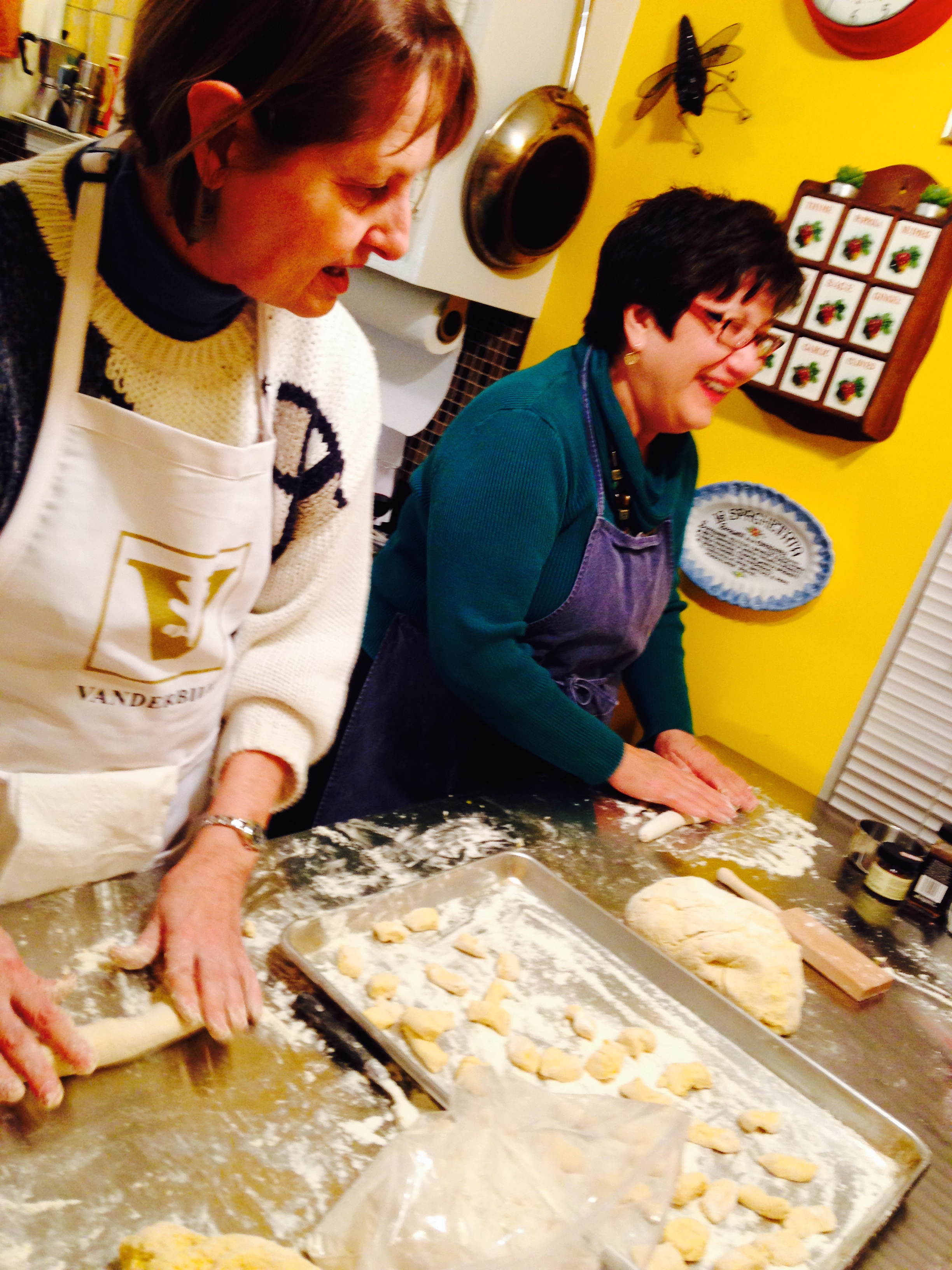
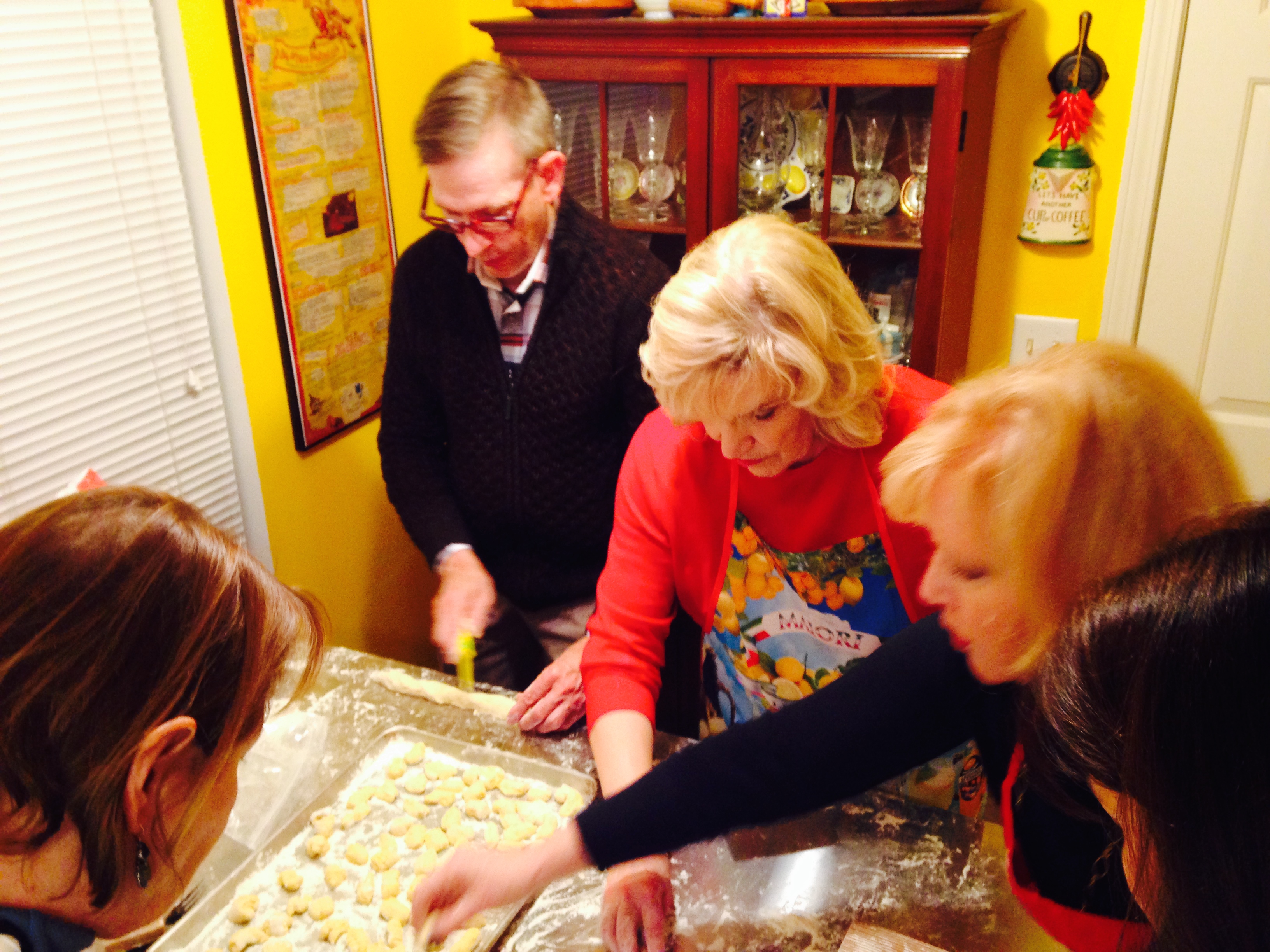
Making gnocchi in class

Making butternut squash gnocchi in class

Better hurry up. Spring is sneaking up on us and soon the very sight of a butternut squash will look passé, an anachronism, winter in the middle of spring: “what are YOU doing here?”

But the supermarket still has ’em and I’m still buying them and still relishing in butternut squash gnocchi. We just made some in class last week. Once we sat down to eat…after all the cooking and prepping and bustle in the kitchen, a newly poured glass of wine dosido-ing with the dinner plate, ready to play…I stuck my fork into one of those pillowy gnocchi and took a bite. Ah, yes. Wasn’t that little dance in the kitchen so worth it? Ah, yes. Yes, yes, yes.

making butternut squash gnocchi in class

making butternut squash gnocchi in class

They are not hard to make. Just one little tricky part. You never know how moist your cooked butternut squash will be. So the flour amounts in the recipe can change. This should be no problem. Just try to add as little flour as you need, but as much to get a nice soft dough, not too sticky, but a little tacky is okay.

I trim my squash of top stem and a sliver from the bottom. Cut the squash in half at the point where it just begins to widen. Be careful cutting this odd-shaped beauty. It’s pretty dense with no straight sides. Cut each half in half lengthwise. Scrape seeds from the bottom quarters. Lay the pieces cut side down on a sheet pan with about a 1/2 inch of water. Roast until tender, let cool, then scrape out your squash.

butternut squash gnocchi

butternut squash gnocchi

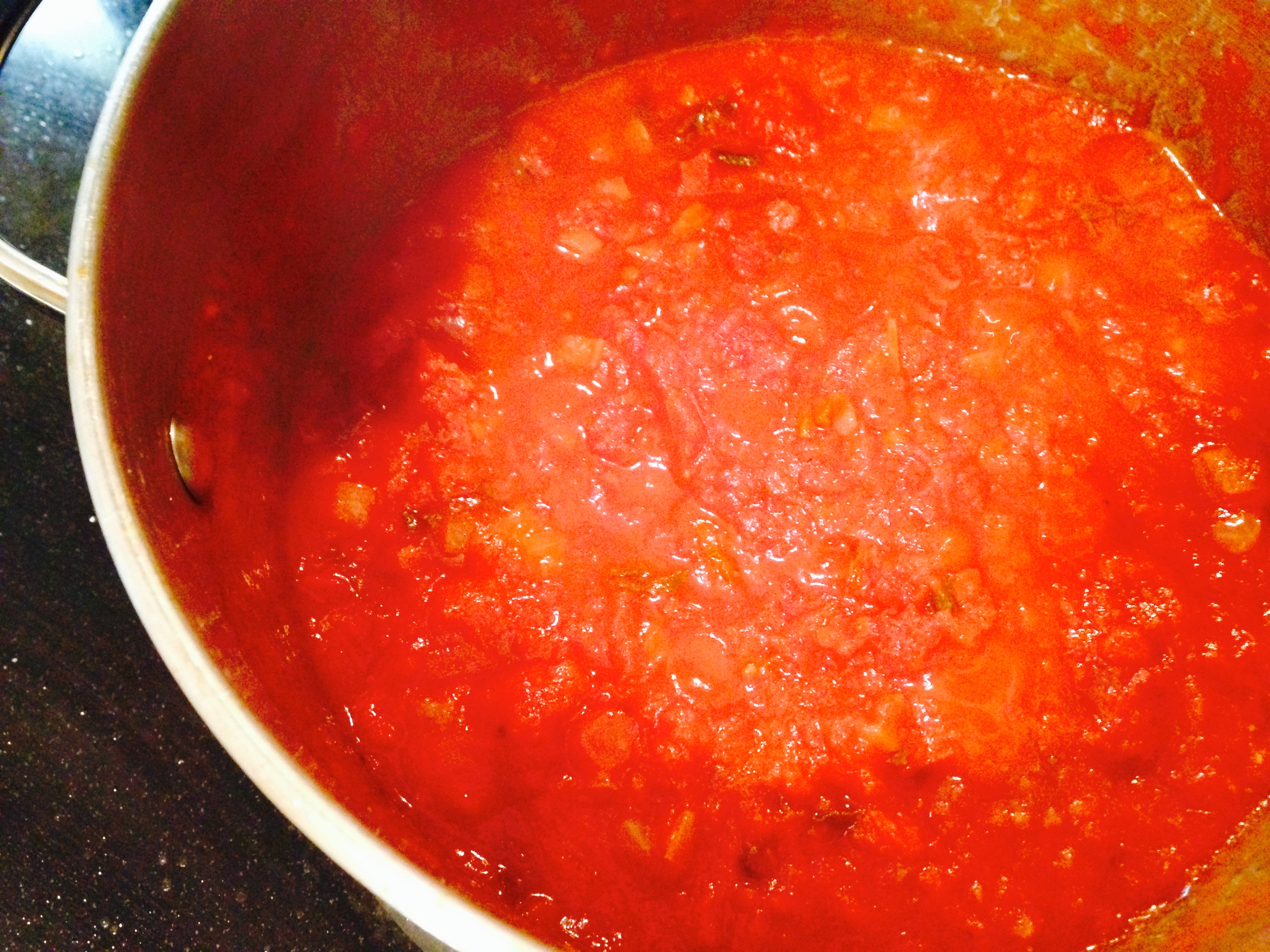
We paired the gnocchi with a simple tomato sauce flavored with sun-dried tomatoes, sage, and butter. If you try it,  let me know how it goes!

sun-dried tomato sauce

sun-dried tomato sauce

Fresh Butternut Squash Gnocchi in Sage-Sun-Dried Tomato Butter Sauce

For the Gnocchi:

2 cups cooked butternut squash, mashed smooth

½ cup ricotta

¼ cup grated parmigiano cheese

½ teaspoon nutmeg

¼ teaspoon hot pepper

salt & pepper to taste

2 cups flour

For the Sauce:

4 tablespoons butter

1 small onion, diced

1/2 cup sun-dried tomatoes, minced

2-3 sage sprigs, leaves minced, stems discarded

1/4 cup white wine or vermouth

1 28-oz can crushed tomatoes

salt & pepper to taste

Make the Sauce: Melt the butter in a medium saucepan. Add the onion, sun-dried tomatoes, sage and sauté until onions are softened, about 5 minutes. Add the wine or vermouth. Let sizzle and almost evaporate. Add the tomatoes. Season with salt & pepper. Simmer for about 15 minutes or more.

Make the gnocchi: In a large bowl, mix together the squash, ricotta, grated cheese, nutmeg, hot pepper and salt & pepper. Add 1 cup of flour and gentle mix in with a large spoon making sure the mixture is smooth and any small chucks of squash are mashed.  Add more flour until you have a dough consistency. Knead until combined. It may be a little sticky – that’s okay.

Break off a small handful of dough and roll into a log about a ½-inch thick. (Coat with more flour if too sticky to handle.) Cut log into ¼-inch pieces. Press each piece lightly against a gnocchi board or the tines of a fork. Toss with flour on a flour-dusted baking sheet. Try not to let them touch to keep them from sticking to each other. Repeat with the rest of the dough.

Finish dish: Bring a pasta pot full of water to a boil. Season with salt.  Drop in gnocchi.  Cook until they float to the surface, about 2-3 minutes, then let cook for about one minute more. Remove with a slotted spoon to a serving bowl. Gently coat with sauce.

making butternut squash gnocchi

making butternut squash gnocchi

Riviera Roasted Potato String Bean Pie

Baked Potato-String Bean Pie

Baked Potato-String Bean Pie

Mmmmm….good.

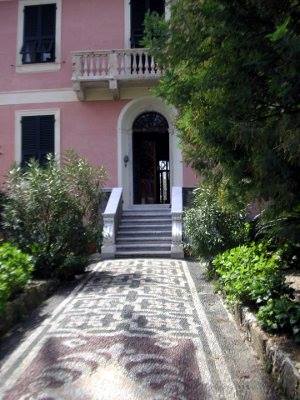
I learned this recipe many years ago from a fearless, adventurous Ligurian woman named Bianca. She lived in a charming pink villa high atop the hills overlooking the Mediterranean on the Levante side of the Italian Riviera. The villa’s sweeping terrace presided over the sea and from that vantage point you could see the small peninsula of Portofino in the short distance.

Bianca's Villa

Bianca’s Villa

I had the fortunate honor of staying there for a full month. And every day of that month I gravitated to the kitchen to see what Bianca was cooking. I spent the other hours mining her Italian cookbook collection and sitting at a cafe in the nearby seaside town of Zoagli, translating captivating recipes into my notebook.

This potato-string-bean “cake” is one of hers. This is her exact recipe. The pie is great as a snack, a side, a picnic dish, or a full meal if you like at any time of day.

Peel and quarter 4-5 medium gold potatoes. Boil till tender. Drain & mash.

potatoes boiling

potatoes boiling

Boil till tender about 2 pounds tipped green beans/string beans. Drain. Pulse in a food processor until broken up but not pureed.

green beans boiling

green beans boiling

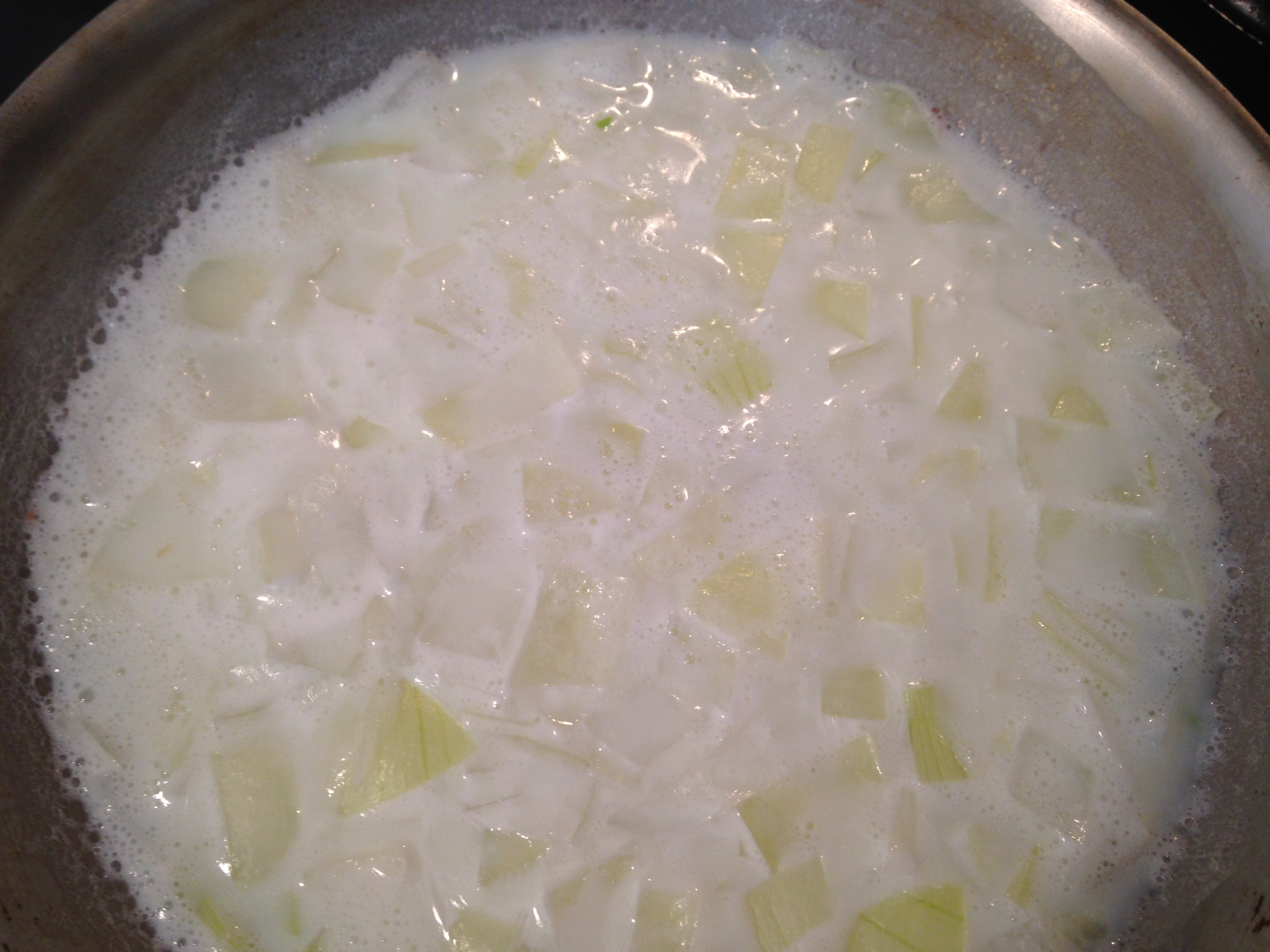
Peel and dice 1 medium onion. Simmer in a little milk diluted with water until tender. Drain.

onions simmering

onions simmering

In a large mixing bowl, mix the potatoes, string beans, onion, 3 eggs, and 1/2 cup grated parmigiano. Season with salt and pepper. Mix well to combine. Butter a 9 x 13 inch sheet pan. Coat butter with breadcrumbs and shake out excess. Press mixture into pan evenly. Press the top with the tines of a fork to make a pattern. Sprinkle some more parmigiano. Drizzle a little olive oil.

ready to bake

ready to bake

Bake in a 400 degree oven for about 30 minutes until golden.

baked potato string bean pie

baked potato string bean pie

Let cool before cutting into squares.

Riviera pie cut into squares

Riviera pie cut into squares

I learned recently that the villa Bianca I lived in is now open for vacation rentals. Looking at the pictures on the new website representing the house wows my memories. Everything looks the same. Everything as beautiful as my memories. Villa Bianca

Riviera Potato & Green Bean Pie

4-5 medium gold potatoes

1 1/2 – 2 lbs. green beans (string beans)

1 onion, diced

1/4 cup milk

3 eggs

1/2 cup grated parmigiano, plus extra for sprinkling

1 tablespoon butter

1/4 cup breadcrumbs

salt & pepper to taste

olive oil for drizzling

Preheat oven to 400 degrees F.

Peel the potatoes and quarter them. Boil in salted water until soft and cooked through. Drain and mash potatoes. Boil string beans until cooked through. Drain and pulse them in a food processor until they are broken up but not as far as pureed. Heat the onion in a small saucepan with the milk and a 1/4 cup water. Cook till softened. Drain.

Mix together the mashed potatoes, pulsed beans, cooked onions in a large mixing bowl. Add the eggs, and cheese, season with salt & pepper. Mix well. Butter a 9 X 13 sheet pan. Coat with the breadcrumbs and shake out excess. Press in the potato mixture until flattened and even. Using the tines of a fork press a pattern on the top. Sprinkle with parmigiano. Drizzle a little olive oil.

Bake for 20-30 minutes until golden. Let cool before cutting into squares for serving.

Click here for my cooking demo of this recipe on WSMV-TV More at Midday…